

Edited by Maria Luigia Vurro
It may sound like the oxymoron of oxymorons, but it is a beautiful reality. How is it possible, you may ask, that a sommelier, par excellence used to tasting so many types of wine, can call himself a teetotaler?
Instead, the project has something extraordinary, as well as being unusual, and the credit goes to those who believed from the beginning and continue to maintain that wine should be first and foremost about sharing and inclusion.
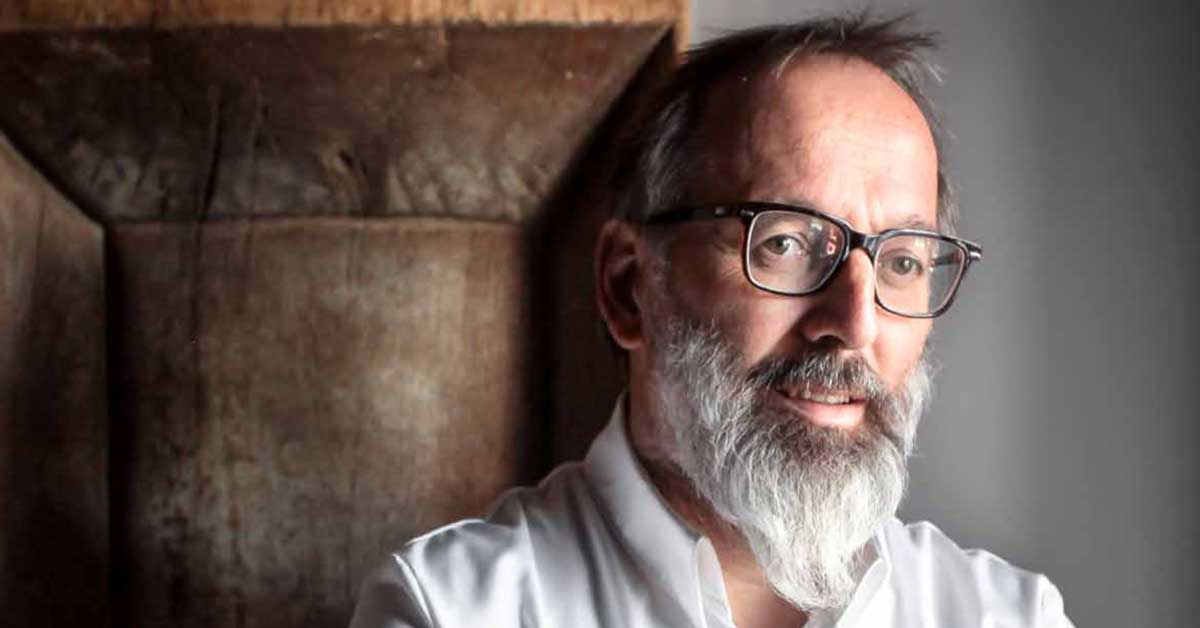
Telling us about it is Raffaele Massaa long and prestigious history within theItalian Sommelier Association of Bari, member since 2000, Official Taster since 2003, course director and lecturer for the Association's annual courses and Delegate Province of Bari since 2006 (a role he was re-appointed to a few weeks ago). Between one responsible role and another, Raffaele has achieved great victories for AIS and great recognition for himself. But the project that makes him most proud (and rightly so, given the results of his work and that of his team) is that of 'Il Sommelier Astemio', set up to offer an opportunity for young people with physical and psychophysical illnesses to learn about wine, tell their stories and become sommeliers even though they cannot consume alcoholic beverages. In the last two months, two new classes of Astemi Sommeliers have graduated in Margherita di Savoia (BT) and Rutigliano (BA), fuelling great interest in this project that could soon cross regional borders and spread to the national AIS.
Where did this project come from and when?
Sommelier Astemio started in 2017 from my son Andrea and the advice of a doctor. My son has an intellectual disability and, like any father, I worry about his future, especially when I am no longer around. His doctor told me that Andrea needed stimulation and advised me to find an activity for him, so I thought of turning to a social cooperative in the province of Bari that already had a restaurant and a brewery where it gave work to young people with various forms of intellectual disability. The first Astemio Sommelier course was born this way, in 2018. But I immediately thought it wasn't enough, so I recruited a team of collaborators within the Italian Sommelier Association and together we brought the project to life in its current form. Now we collaborate with Apulian hotelier institutes, as in the case of the last course in Margherita di Savoia, and with the various territorial realities that support us in the realisation of the courses.

How does the course compare to a normal sommelier course?
The course is on one level and consists of 14 lessons, the topics of which vary from oenology to viticulture, from table service to the visual and olfactory characteristics of wine. In 2021 we also presented a textbook for the course, Io Valgo - Imparo a raccontare il vino, which explains with short texts and many pictures all the concepts a sommelier needs to tell about wine, leaving out the actual tasting part of course. We work with young people who often have difficulty with complex concepts, so we moved on several levels. In each lesson we held a small sensory workshop in which the children learned about and literally touched the aromas and flavours of herbs, spices and fruits that enrich the bouquets of wines. We took them to the winery at the beginning of the course to let them see the wine-making process up close and in real time. The written and visual language we use in the textbook to describe food and wine pairings, for example, is also very intuitive: there we have used expressions such as "wink", "go hand in hand" or even "marry" to describe how food and wine go together, juxtaposing them with images to better fix the concepts.
Was there a topic that you found somewhat 'difficult' to explain to the children?
A 'difficult' subject in general no, but we had to face the fact that the children, due to their various disabilities, go at different speeds. Some take longer to learn concepts, others are much faster. In the Rutigliano course, there was one boy in particular who filled us with questions in every lesson, he wanted to go deeper and deeper into every subject, and we were aware that answering his every question would confuse the other boys. So sometimes we were the ones who had a little difficulty in teaching! But otherwise in the end, with great effort, we overcame those too.
How did previous Astemi Sommeliers manage to fit in professionally?
So far, so good. My son Andrea has worked with various local businesses, including the Hi Hotel in Bari, and I know of other trainees who occasionally work in the catering industry. But given the nature of their physical and psychophysical problems, it is up to us parents to stimulate them and lead them towards a constant commitment and updating in this area over time and, when this does not happen, the risk is to lose all the knowledge they have acquired. In Apulia, the realities that make themselves available to give job opportunities to these youngsters in the food and wine sector are becoming more and more. Lately, the Bari delegation has come into contact with the social cooperative Promozione Sociale e Solidarietà in Trani, which a few months ago opened the Locanda del Giullare, a restaurant where young people with intellectual disabilities work and at the same time entertain patrons with improvised theatre performances. It is there that on 8 July we will hand out diplomas to the ten Astemi Sommeliers from the Rutigliano course, because we want to show parents and young people that everything is possible, even if there are objective difficulties.
How do you imagine the future of the project?
We are ambitious and we know we can be. Three years ago we began negotiations with the municipality of Bari to acquire one of its properties, a masseria with several hectares of farmland around it. Our project, which is already ready, envisages setting up an educational centre that revolves around the Astemio Sommelier, with sensory gardens, classrooms for didactics, a small vineyard and, why not, even a guesthouse to host young people and companions from other regions. We also want it to be a training centre for AIS delegates and teachers from the rest of Italy, since there is a lot of interest in this project at national level. The only real obstacle to the realisation of this great ambition is bureaucracy, but everything can be overcome with perseverance and by showing the results that the courses have had in recent years.





 English
 Italian