

A medieval castle, a former prison, whose stones tell the story of an 11th-century B.C. city: Oderzo; inside, the remains of a Roman patrician dwelling, now an archaeological site. These are the millenary presences around which the Restaurant Gelliuswhere dishes are served enveloped in an elegant magic that smells of antiquity, of dreams realised: those of the owner Genesius Settenwho became infatuated with the place and decided to renovate it for people who love good food to live in.
Alessandro Breda brings a Michelin Star to Restaurant Gellius
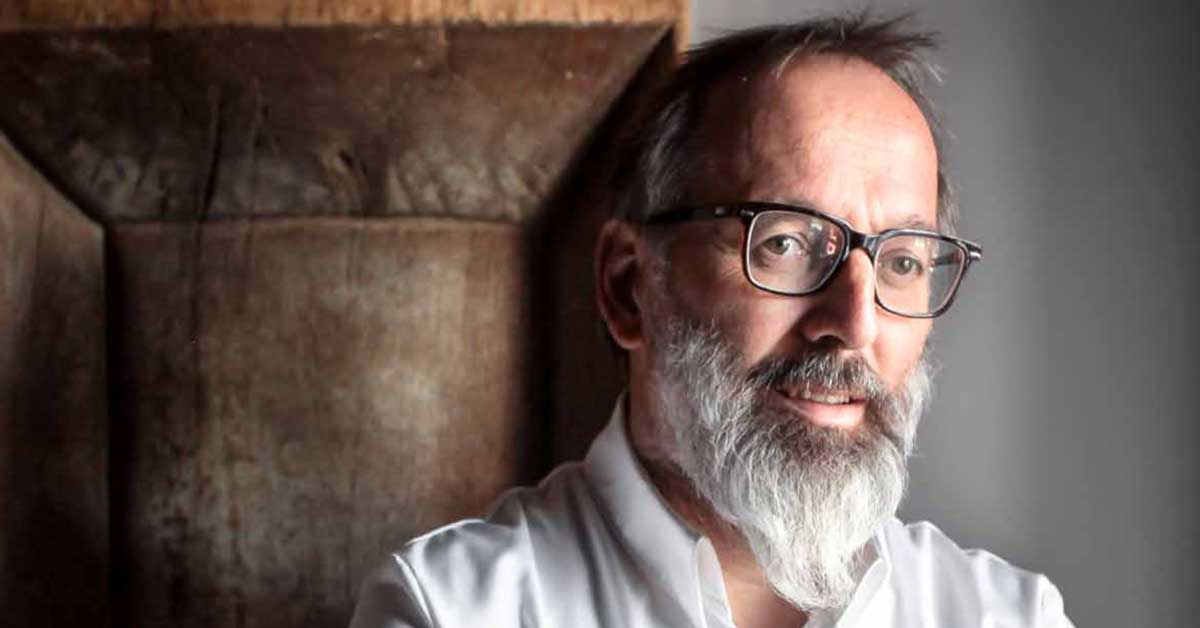
And then there's him, the chef and manager, Alessandro Bredawho, with love for his work, passion and determination, crowned Mr Setten's dream by bringing home a Michelin star. At home is the right term, because when you enter the Gellius, if the first perception that envelops you is the refinement of the ambience, the accuracy of the details and the gentility of the staff, as soon as you sit down at the table all this does not turn into excessive and uncomfortable sophistication, but into kindness and delicate attention, those of a guest who makes you feel at home.
As you sip a good glass of wine, chosen from the wide selection of the best Italian and foreign labels in the cellar, you look around: the modern renovations do not affect the history of the place. On the contrary, they seem to give more emphasis to the ancient magic that fills the atmosphere with attention to every detail, from the lighting to the background music, from the white of the tablecloths that contrasts with the exposed stonework, to the wooden and glass staircase that leads to the spectacular archaeological corner, or to the Nyùmore informal, but no less elegant bistro.
A cascade of cutlery from the ceiling: the heart of the kitchen also beats loudly in the hall
In the centre of the room, a cascade of cutlery attached to wires descends from the ceiling, in a marvellous interplay where the old refers to the modern, with the kitchen acting as the beating heart, living in perfect harmony with the room. You can sense it in the air of serenity that reigns all around, you see it in the sincere smiles of the staff, in the competence of the person who brings the dish to your table and tells you about it as if he had cooked it.
There it is, the cascade of cutlery: the heart of the kitchen beating loudly in the dining room as well. No cold wars between cooks and waiters, between chefs and sommeliers: this is the perfect algorithm that gives customers what they want: an unforgettable experience.
Gualtiero Marchesi said: art is the setting in place of truth.
The chef must create, without necessarily chasing the new and the unseen, because novelty can coexist with both the unknown and the known, the important thing is that it draws on the truth. Alessandro Breda - who was part of Marchesi's brigade - gives those who sit at his table an experience that starts from a cuisine that is always immersed in the seasonality of the land, where the flavours and quality of the products remain unaltered.
Tradition and simplicity, transformed by his art into dishes that sound on the palate each time with different lows and highs, tones of sweet, salty or sour, always differently mixed; with the right pauses and silences, just like in a concert.
Seasonality of ingredients and menu
If in autumn the tannic acidity and crunchy timbre of the pomegranate contrast with the sweetness of the chestnut cream, in spring the spatula fish swims proudly in flavour in a courgette mousse, embellished with edible flowers and bread popcorn that crunch pleasantly with every bite. Rhythm is sometimes dictated by contrasting temperatures, so the warm spaghetti with squid ink is served with cold scallop crudo, wrapped in room temperature basil sauce, while the mantecato rice with sea bass gently melts the festive onion ice cream with its warmth. And then there is the creamy egg, accompanied each season by what the earth offers: mushrooms and black truffle, or asparagus and herring roe, or tarragon and almond pesto.
A special container for each courseporcelain in different shapes and sizes, because here too the detail makes the difference and the presentation, the beauty of the dish, is part of the experience for diners. No virtuosity though, just delicate balance. Alessandro Breda is neither performer nor interpreter, but undoubtedly a composerexactly what Gualtiero Marchesi used to call the real cooks.





 English
 Italian