
The secret ingredients of a perfect cake.
It is a sunny Saturday morning. Padua is cheerfully crowded. And so is the Pastry shopand smiling: gluttonous and happy looks, satisfied and relaxed faces. It's nice to watch people being charmed and carried away by gluttony, letting go of their inhibitions, as if they had become children again. Yes, because it takes the soul of a child, a willingness to trust and a desire to listen to the heart and memories, to be guided by pure sensations: only then will the sweets really reveal their world to you.

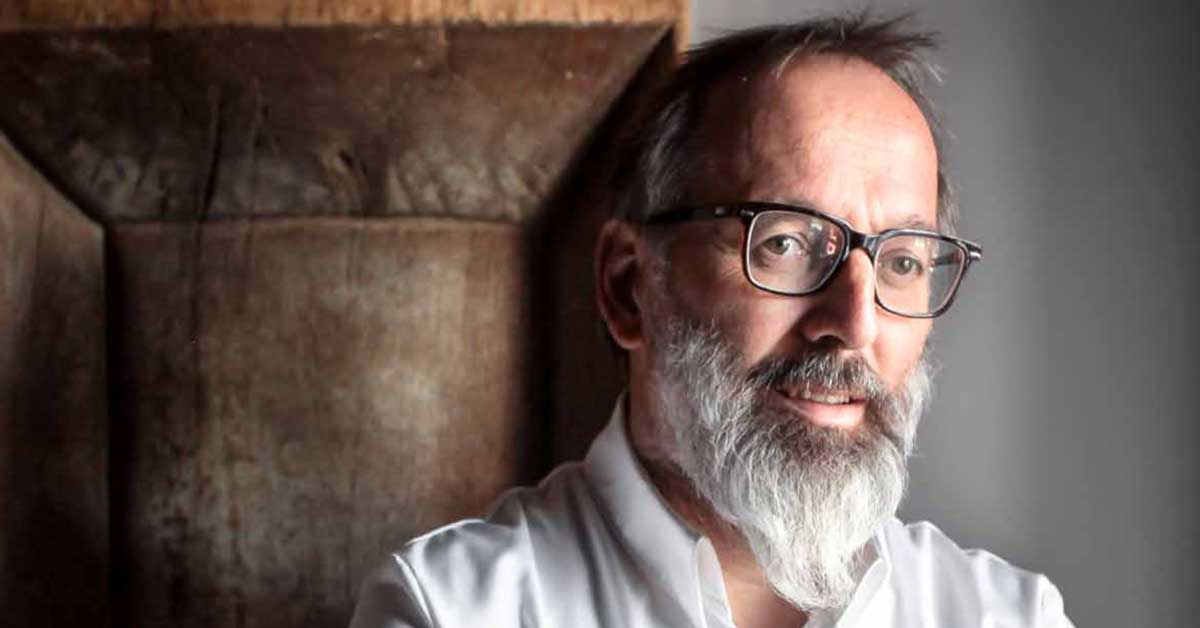
'Black hole', that's how Luigi Biasetto laughingly defines that world, which he cannot do without. He led me there by the hand, like the White Rabbit with little Alice, and the pastry shop was transformed into an extraordinary Wonderland; not a fantasy land, but a real one, where you can experience real emotions, healthy for the heart and body. In that land I discovered why sweets have the power to free us from adult, controlled rationality, but also what the secret ingredients of a perfect cake are.
"I soon realised - says Biasetto - that we all have an expectation when we eat something and most of the time we appeal to our memories. For example, a dish may have an aroma that reminds us of our grandmother's ragout, and that ragout is our parameter of comparison: it will always be the best ragout for us ... This also happens in confectionery: when we eat a dessert we appeal to our history, to our memories. Bringing memories to life, giving voice to a sense of belonging to a story, is one of the magic things that a dessert must have. Ever since I was a child, I have been driven by curiosity to understand what happens when you mix two ingredients, what interaction and effect are. But alongside this I have also always looked at the emotional level, at what happens to us emotionally when we eat. That is how confectionery became my passion in life'.
But what does 'passion of life' mean?
"I believe that each of us has, even before birth, a role, in a context where we can, at a given moment, give our best. There are people who search their whole life for what their mission is and some realise it too late. I was lucky enough to realise it early on, as a child. It was probably because I had two grandmothers who loved cooking and I still remember the smell of sautéing at 7am. I loved to cook, but I was also a bit 'nosy'. When builders were doing work they would mix substances and I wanted to understand why, what they were, what was going on. One ingredient acting together with another causes a reaction. This gives rise to new ingredients, in confectionery more than ever. Here, I have always tried to understand what happens when you cook and eat something...'.
So to create a perfect cake, you need a reminder of memories?
"Yes, but then there is the substance. Pastry is real food. There are proteins (the eggs, the flour), sugars (real energy), fats that provide us with a 'supply' and so on. When we put all the elements together, we have to appeal to our metabolism, to its needs. Today, no one needs 8000 calories a day and the old recipes for cakes rich in butter and sugar need to be changed. We have to be very careful that what we eat is in balance with our needs. When I have finished eating I have to feel good: I have to eat something that makes me feel good emotionally but also physically'.
A cake that balances the nutritional elements...
"Yes, memories and balance. Then there are the balances of flavours: sweet, salty, sour, bitter and umami, the famous smoky. These are the flavours we have on our tongue, palate and cheeks. Trivially when we eat something we say that it is little or too tasty; and maybe the more we eat it the more we like it. Here, in truth we are appealing to flavours, to their balance. And flavours can be felt even with a stuffed nose. Then there is another fundamental element: aromas, that is, the ability to ensure that the scent of hazelnuts or chocolate, strawberry, lemon, or any aroma, is well preserved within a food. These are the so-called volatile essential oils, which I will only smell through my sense of smell, if I don't have a cold and I'm trained, and especially when I swallow, because due to the humidity and heat of my body, these aromas come up from my trachea and nose and I will smell scents... When the aromas are well balanced it will be apotheosis! Ah... and then the textures in the mouth, they are so important! In short, the memory, the textures, the balance, the flavours, the aromas... then it becomes the perfect dessert! The tiramisu. Inside there is the memory of grandmothers, it is easily made; it has bitter cocoa, the smokiness of cocoa beans. The coffee has roastiness and acidity. Mascarpone has acidity, sugar and protein. There is the balance of flavours, it has creaminess but also juiciness, because the Savoyard is soaked in coffee. Perhaps it has a lack of texture because it lacks a bit of crunch, which some people give with macaroons, but it is one of the most perfect desserts in existence'.
And the colours?
"Colours are subjective and are of the moment, because everyone needs energy at a certain time in their life, and colours are energy. Today I am in the mood for red and maybe tomorrow I have a bad day and I am fine with black. Colour then obviously associates it with taste, because it is also a symbol of flavour: if it is yellow it is likely to be lemon, if it is green it could be pistachio or mint. So colour in some way pre-empts a smell and a taste and is important because if it is not consistent with expectations it could certainly intrigue those who are discovering something new, but also create a barrier for people who are more rigid, less flexible and tolerant'.
Colours are one of the most prominent features of macaroons, which she considers to be the sweets of the future...
"Yes, macaroons are like a palette: the painter has colours and can create, research and create again... The colour combinations are infinite, but so are the flavours, because I can adjust more or less sugar, salty, less salty, infinite flavours... you can do anything. The macaron is easy to transport, to ship. It's small, so when I eat it I don't feel guilty... it's a treat and every time it's different, in colour, texture, emotion. That it is the cake of the future I see with the children. Children in front of a display case of macaroons rejoice and they have much clearer ideas than adults. The child doesn't care what's inside, he chooses by instinct and if a four-year-old chooses a macaron and then finds it good, he will associate it with something positive for the rest of his life. Children are crazy about macaroons, there is no doubt that confectionery will go in that direction.
I enchant myself in front of the display of macaroons at the Pastry shop Biasetto. By now I am Alice and I let myself be carried away by instinct, by colours. One bite... the scent of grandma's roses. Another bite... the tangerine of Christmas cheer. I look at the sweets.
Maestro Biasetto, if you were a sweet, what sweet would you be?
"A chocolate panettone! Because it is extremely complex, variable, uncontrollable! My mum when I was little took me to Venice and put me on one of those children's leashes to hold me down and prevent me from running away and ending up in the water. I have a photo: in the piazza At St Mark's my mum took this leash off me and with her expression told me clearly 'go wherever you want'! The day before yesterday I was in Milan, just back from France and I had to leave for Rome via Padua. My mother asked me, 'when are you going to stop and slow down a bit?' And I told her, 'mum, do you remember when I was three years old and you took off my leash?' Yes, I would definitely be a chocolate panettone!"
Ph. credits: Lonati Photography



 English
 Italian