

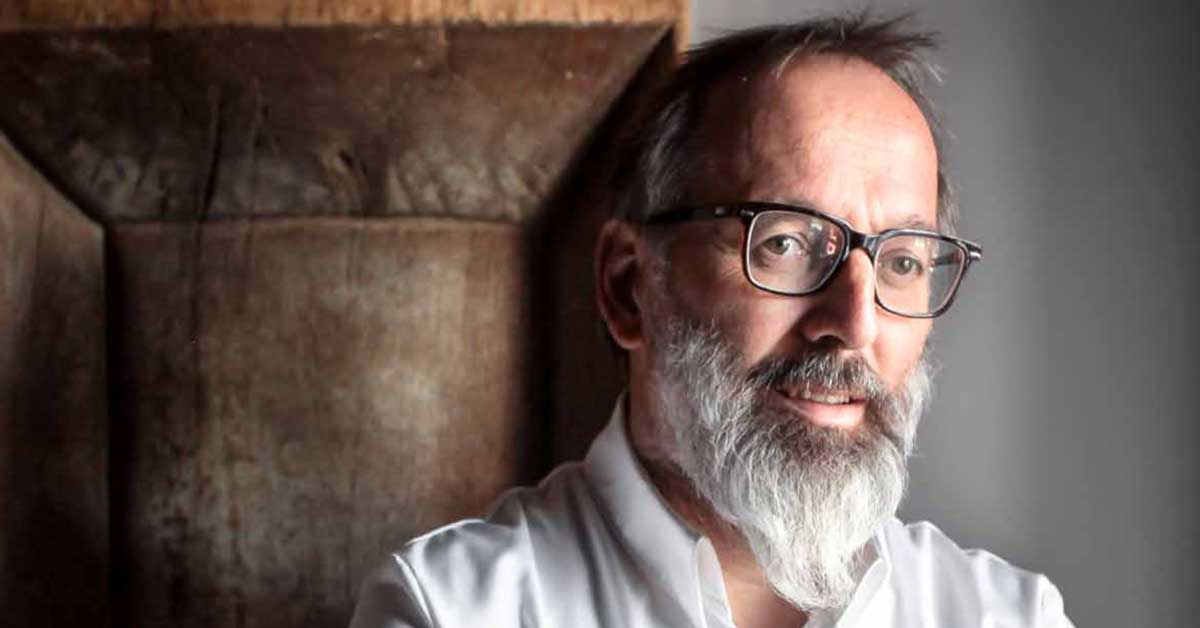
Eclectic professional, tireless storyteller and bridge between territories, generations and sectors, Nello Gatti is one of those communicators who do not just describe wine: they live it, translate it, give it back to people in new and accessible forms. From Irpinia to Emilia, passing through Europe, he has succeeded in becoming a spokesman for an inclusive and modern vision of wine and food culture, earning over time a nickname that has become a symbol of his commitment: 'The Ambassador'.
We interviewed him to let him tell us, in his unmistakable style, his story, his vision of the world of wine, and the challenges that await those who want to approach this universe today.
The nickname 'Ambassador' defines you thoroughly: can you tell us about the first moment when you realised you passionately represented wine culture?
Passion is very often not enough, although it is one of the main motivations that drives us to pursue even irrational paths. In wine, I have found various elements that fascinate me and so I love to delve into them, from history to travel, from society to catering, from geopolitics to communication. As I often reiterate, I do not come from any generation of winemakers, so my first approach to the subject came at a later age, when, due to work requirements, I found myself paying for my studies by working alongside a commercial agent. A start from the bottom in short, but one that allowed me to understand the importance of the 'gavetta' and gradually position myself as an interlocutor between supply and demand, thus stimulating the desire to want to contribute actively. Over the years, there have been many closed doors, criticisms, misunderstandings, and even some nastiness, but these are far inferior to the objectives that I have matured and achieved over the past 15 years, and in any case preparatory to a type of career that I wanted to build, where one does not look at schedules, weekends, stereotypes, and stability, but tries to trace a path made up of collective commitment, cross-listening, and working in the field together with young and old, experts and simple enthusiasts, producers and consumers, creating a system. Over the last few years, I have realised that perhaps it is precisely this 'democratic' and multidisciplinary approach of mine that has allowed me to differentiate the form, substance and audience of my communication in the world of wine, enabling me to work between restaurants and institutions, commerce and tourism, dining room and cellar. In short, 'The Ambassador' is a nickname affectionately engraved in my mind, a sense of devotion to a mentor who helped me believe in myself and who called me that, but I remain for everyone a citizen of the wine world.
You have lived in Austria, Spain, the UK, France and Albania: how has your vision of food and wine changed thanks to these experiences abroad?
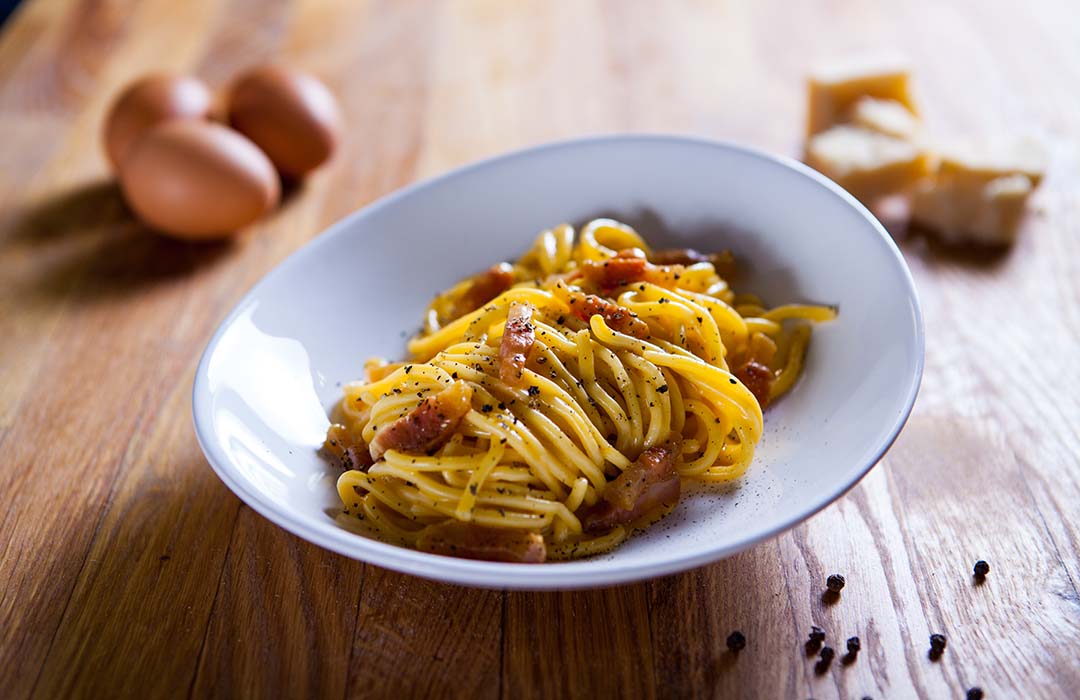
If you approach each trip, residence or work experience abroad with the necessary open-mindedness, it can add a little piece to your store of knowledge by becoming increasingly aware of your role in the world. If you are then able to metabolise information and make logical global sense, your perception will gain several useful perspectives: from Italy to abroad and vice versa. You will realise as the years go by and as you travel that some logics are repeated, while some dramatic realities, such as 'Italian sounding' products and the underpriced sale of 'Made in Italy' are, alas, as present as ever in every country in the world. This is why we need a 'Dual Flag' commitment, as it was conceived by the great Enrico Mattei, not only to develop trade relations, but also cultural and collaborative ones. Sometimes the 'enemy' is much closer than we may think, and if abroad we are horrified by carbonara with cream, pizza with pineapple, and wines/food products with fancy names at ridiculous prices, let us think about the faults of everyone, including ourselves. It is not just a question of product and price, but also of communication and business strategy, where value and cultural connection are key elements in calibrating one's positioning.
What is your personal maxim when it comes to tasting life through a chalice?
We have had enough of reviews that analyse through the 3 steps of tasting a copy-paste sequence that stigmatises a much more varied scenario with a broader fruition. Scores, rankings and technical tastings are a necessary and fundamental exercise to get on track, but then you have to take a very different route that is not limited to narrating the presence of velvety tannins or floral scents. That is why I like to compose descriptions that resemble the lyrics of a song, or to insert artistic, musical, cinematographic currents within the story.
Have you ever wondered if a customer orders a bottle for its vanilla or green pepper notes? If people in the supermarket have the time and desire to understand our more than 300 AOCs? If staff in restaurants are stimulated by wine knowledge and sales? These are the questions I like to answer, without rhetoric or dismissing everything as a consequence of the collapse in consumption or the alienation of the new generations, because at the sharing table there is room for all kinds of knowledge, where everyone can intervene to support the supply chain. Wine does not belong only to producers or sommeliers: one for all, all for one.
Sincerity and listening are fundamental for you: how do these qualities shine through in your everyday life, between events, tastings and stories?
The role of the communicator is still not well understood, let alone identified with its own discipline in Italy. As in other sectors, I am thinking of chefs or photographers, one can self-declare oneself as such with little. All you need is a smartphone, a profile on Instagram, and off you go, accounts are born with the aim of 'sharing the fantastic world of wine' but which very often limit themselves to mere exhibitionism that does not bring any kind of novelty, narration, interaction or criticism in favour of the sector. This is why listening must be our pillar: why a winery or consortium relies on a communicator to improve processes, image, sales. Just as a restaurant relies on a communicator to improve positioning, attendance and average receipts. Professionalism, overview and medium- to long-term management are required. Be wary of those who promote a product they do not know, of those who dispense advice on professions they have never held. Forget followers and engagement and follow those who improve you, those who welcome you and those who listen to you.
You are originally from Avellino and grew up in the Food Valley: what influence have these places had on your identity as a communicator?
I am the son of a typical Italian story, made up of emigrants and territories full of 'pride and prejudice'. Emilia was my father's fortune, at a time when manufacturing and trade were the redemption of all those people who went from being marginalised to becoming the 'productive fabric' of the host region. My origins, on the other hand, lie in that triangle of the Mezzogiorno that sees on paper 3 DOCGs, a devastating earthquake behind it and on a demographic level a slow but relentless agony. I have had the good fortune to work for wineries in both territories and I must alas confirm what is most banal about the North vs. South clichés in that it is really true, in the North they know how to work as a system while the South is in most cases a patchwork of private initiatives in constant battle with their neighbours. One example above all? I remember when, as Export Manager at a Lambrusco winery in the Modena area, we had found a supply chain agreement where we had 'associated' producers of Balsamic Vinegar, Parmigiano Reggiano and Prosciutto di Parma in a trade fair and then commercial function, while during the years I worked at a winery in Irpinia, I was forbidden even to visit other wineries in the area, as well as noticing that territorial operations, consortia and between companies, were in the case of the south mainly aimed at the mere fruition of financing while I noticed that other territories, very often located in the north, directed massive operations that then bore fruit over the years. Obviously with this I do not want to generalise, but to highlight how much potential we waste in our neighbourhood wars and the absence of virtuous districts where the territory acts as a system rather than an enemy of itself. It would be a good exercise to remember that, especially in times when globalisation of markets and supply chain interconnection are indispensable elements, union is strength. No more envy, comparisons or syndromes of impotence: each territory must face its own challenges. In Campania I look forward to contributing to its broader and more modern vision, but I must sadly remind you that I have been contacted three times in recent months: twice for a 0-budget proposal, while the last one did not go through because, caught up in the celebrations for Napoli's Scudetti championship, the principals did not have time to organise the incoming event in the best possible way.
You have received awards such as the Gourmand World of Food and Wine Culture, Excellence, Porthos, Vinitaly 5 Star Wines and many others. Which award has excited you the most and why?
I am not a collector of awards, and I do not like to define myself by them, but it is obvious that they are a demonstration of appreciation for me and the work I have done over the years. The most significant is certainly the 'Special Wine Culture Award' received at the presentation of the '5 Star Wines' guide at Vinitaly in Verona, together with Daniele Cernilli and Doctor Wine. An award that comes as a surprise and 10 years after my first participation at Vinitaly, where I put up posters and broached wine for visitors. A sign that makes me realise how no one can really know what awaits you in the future and how even a small experience can lead to a great achievement.
Looking ahead: what is your personal mission today in the world of wine?
I feel I have a great responsibility, and that is to connect generations and sectors through the language of wine. I like to deal with training and planning, because I am aware that there is a need for hybrid, multiple profiles, capable of interfacing with various players in the supply chain. This does not mean 'doing everything', but knowing how to address and translate concepts so that they can be understood, appreciated and disseminated. Wine must emerge from the niche and become popular again. With humility, education and a critical sense. Because communicating is not talking: it is listening.
Can you tell us a food and wine pairing?
Even there, the best surprises come when you step outside the box, and I fear that some tables have stiffened the expansion and dynamism of this beautiful experience that links food to wine and beyond. Certainly, many pairings are born with a strong territorial link, and it is absolutely useful and necessary to go and rediscover local recipes and wines, but then we must not stop there, otherwise we risk the very generic and banal 'to go with cold cuts and cheese' engraved on the back label. Cuisines have evolved, ingredients have changed, contaminations have given rise to a much greater depth of offerings, and we in Italy still think we are going to intrigue someone with our passiti under the 'dessert wine' list? I asked this very question at the beginning of one of my last Wine Labs, where Moscato passito was at the centre of the experience but, in my opinion, limited in its use precisely because it is pigeonholed in this category that sees it 'to go with desserts'. How many people actually order a glass of sweet wine specifically to go with dessert? How many people actually pay attention to dosage when buying a bottle during their celebrations? Well, for these and other logical reasons, I certainly agree on the pairings to be made according to the food and wine experience, but I do not exclude daring, experiments and a few edgy notes to indulge in from time to time. The goal is not to achieve perfection, but pleasure... and I think everyone must find their own!
Your extra-wine inspirations: are there books, artists or experiences outside the kitchen that influence your storytelling?
Absolutely. If we think that wine is only made by people who make wine, we are very wrong. Of course, many people have contributed to my professional growth and every day various producers add an extra piece of knowledge to my journey, but I cannot forget those who, not strictly related to this sector, continue to give me great human and professional gratification. First of all, Roberto Costa, a personality who has never stopped reaching out to help or assist colleagues and an entire sector, that of hospitality (even more so for him who lives in the UK), which is particularly suffering at the moment, and then the trio of restaurateurs Marco, Nicola, and Michele of the Hydra restaurant in Salerno, a true temple of pleasure where I love to confront, reflect, and listen. I also have a strong esteem for some colleagues, including Giacomo Solimene, Andrea Zigrossi and Francesco Fantinel, just as I am fascinated by some of the pens that write about food and wine and others. Above all, among my main sources of inspiration, there is definitely Alessandro Barbero. I dream of being able to tell the world of wine with his pleasantness, his brilliant and intelligent self-irony, opening up the pleasure of travel and discovery to a wide audience. Finally, I cannot forget Prof. Franco Ferrarotti, a person who many years ago helped me enormously in understanding a subject very dear to me: Adriano Olivetti's business model. We had spoken just a year ago, when I told him that 10 years later I would be returning to Canavese at Olivetti's Officine H as Artistic Director for a wine-related event. Then after a few months he left us, but I will always keep his beautiful memory, trying to give back all the good he received towards the same territory.
What should a person who wants to approach wine in an authentic and contemporary way look for?
There is a need for courage, for finding new paths, for expertise and for 'getting one's hands dirty'. Nothing new, in short. New functions have emerged and processes are much more complex between producer and consumer, so new specialisations have also emerged. Think of new opportunities related to user experience, wine tourism, management and CRM processes. There are new forms of communication and sales, just as venues, wine shops and cellars are no longer simply places of production or direct sales, but locations suited to new forms of users, from the wedding to the corporate segment. We are also fortunate to have tools that help us speed up and organise processes, but we must not forget the importance of critical thinking, analysis and creativity on everyone's part. I dream of a new generation capable of reversing this long stagnation in which divisions, obsolete canons and clichés have dominated but also condemned a world of wine that is increasingly distant from its time, in the hope that it can return to that degree of coexistence of the older generations, with full awareness of tools and modern thinking. In short, rather than dispensing good advice to young people, I would like to see them in action. Let them.
Nello Gatti reminded us that wine culture is a living fabric, made up of exchange, respect, vision and relationship. At a time when it is easy to confuse visibility with authority, his voice stands out for its coherence and depth. For those who meet him - online, at an event or between the pages of a guidebook - his contribution always leaves an imprint: that of an ambassador who loves what he tells and tells what he loves, without filters but with heart.




 English
 Italian