

"Passions are great emotions that shake our lives, capture them and propel them towards wonderful goals". These few words stolen from Emanuela Breda could
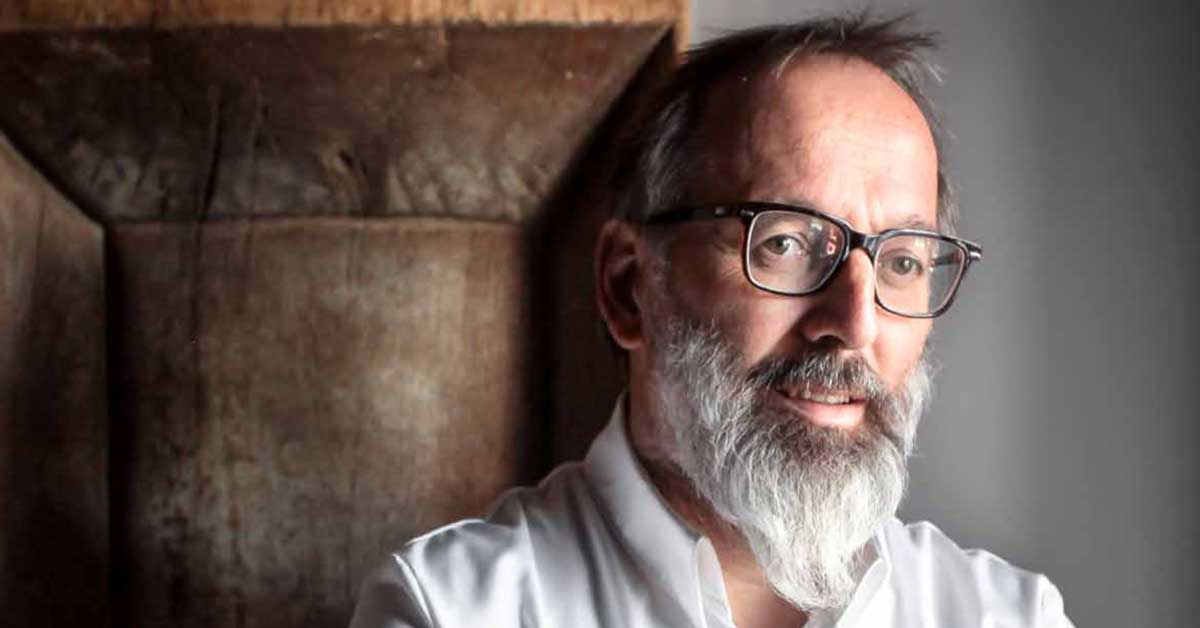
be the life story of Christmas Giunta.
In fact, the kitchen captured Christmas when he was still just a child and spent his days with his aunts, and has not let him go since.

"My mother worked," says the chef - and during the day left me with my aunts, elderly women of Greek origin. I remember as if it were yesterday the smell of the sauces and meat sauce simmering for hours. And after lunch they would knead biscuits, then bake bread, and afterwards, while the bread was baking, they would start preparing dinner. I had a great family; these women cooked from early in the morning until late at night. I think mine is a passed-down passion; what else could I have wanted to do as a kid but go to hotel school, after a childhood so full of love for cooking? I only had one desire: to improve and refine everything I had learnt; and to study, to learn more'.

When there is the 'bump' of talent behind the passion, that kid becomes a cook; but the bump grows, and then he becomes an entrepreneur. Natale was 19 years old when he found himself running a restaurant on his own; and two years later he opened "La Nouvelle Cousine, his first haute cuisine restaurant. Since then, many have followed and today, Chef Giunta divides his time between the "Castello a Mare' in Palermo, 'Secret' and 'Oro' in Romethe unfailingly joyful television presence at "La Prova del Cuoco', the Amalfi Coast with its "Food&Sud" show cooking events at the NH Collection Grand Hotel Convento in Amalfi and, why not, always new projects in the suitcase.
"When I started - reveals Christmas - I didn't think I could get where I am now. I just wanted to be a cook. Also because in those days the cook was not a representative figure like he is today. I often tell this to young people. I like to reminisce and remember where I came from; the cooks of my generation were born in a very different environment than today. The cook was locked in the kitchen and that was it, nobody was interested in getting to know you. It's only 20 years ago, it's true, and yet back then, cooks didn't know how, let alone go on television!'.
Has this departure as a 'hidden-in-the-kitchen' cook made you experience the role of TV personality with greater awareness?
"Absolutely. Today I go on TV three times a week, but I have never stopped being in the kitchen, doing my job with commitment and a lot of humility, because that's the only way results come. I used to work 12 hours a day, today I work 18! I could have simply been a chef and run a kitchen, but I felt that I could and wanted to become an entrepreneur. And when you become an entrepreneur, the effort and the hours of work increase. It's not easy, but if you do it with your heart you can do it.
I wanted to bring my heart to television. Over the years I have told people about myself, my family, my cooking. Cooking is about yourself, always, and I am the one who keeps my feet firmly planted on the ground when I leave the screens'.

Palermo and Rome: two different restaurants and two different types of catering?
"The restaurant in Palermo is linked to Sicilian cuisine, but with a slight gourmet edge and therefore elegant. The historical elements of the recipes are revisited and corrected to offer modern, lightened cuisine. Alongside the gourmet menu I offer a more traditional menu, and then there is a space dedicated to events. It is a very large restaurant in a crazy location. We are inside the archaeological site of the Castle, by the sea. You can see the boats and the blue water and the historic walls... The restaurant in Rome was born on the concept of the old Secret Bars, those places hidden among the buildings where you would enter through an anonymous doorway and maybe go down into the basement and then unexpectedly meet a local. It's a hard place to find, but when you get there and climb the stairs, you find yourself on a terrace overlooking a breathtaking view, the Imperial Forum. Secret is the summer restaurant located in the most panoramic spot, Oro on the other hand is the winter restaurant. In Rome I wanted to bring a more creative cuisine, out of the box. It is an expression of national and international gourmet cuisine. Then it is clear that Sicily is there, because my recipes are always contaminated by my land'.
But in the kitchen are you more classic and romantic or more innovative?
"I would say it's both. But I am not exaggerated. I like a cuisine that has a harmony of characters, of customisation: a whimsical cuisine yes, but up to a certain point. And I don't like too much chemistry, in the sense that the quest to impress must not predominate. I don't think it is necessary to freeze-dry a mushroom; I prefer to bring a product to the table that you can recognise when you see it and then taste it. Behind a dish there must be excellent raw material, research, study and technique, but I don't like to process a product for 12 hours before serving it. So I would say that mine is a refined cuisine, but not desperate. There is no need for desperation in the kitchen; there is no need to convince journalists or diners that clams go well with chocolate. Mine certainly isn't desperate cooking!'.
You brought your cuisine to Amalfi too...
"Yes, a project in a 13th century convent: a series of events, Food&South, which have as their common thread the food and wine link between Sicily and Campania. The cuisine of Campania and Sicily are very similar and put together they allow the creation of truly explosive dishes; a multifaceted menu that tells, especially to tourists, the culinary tradition of the south. Southern food that in this project wanted to merge two lands'.

How important was determination to get where you are?
"It was not, it is important, every day! If you are not determined, you won't get anywhere. You have to believe in your ideas and projects, you have to believe in yourself, that is the only winning key. You have to keep going like a train, never stop, convinced of yourself and what you are doing, but never forgetting the respect you have for people, and for your work'.
The next project?
"Palermo's new restaurant, Casa Giunta! No gourmet cuisine, just traditional cuisine. I felt the need to create a family place, just like when I invite friends to my house and cook for them; something I love to do. I wanted a restaurant where they don't serve stiletto heels and ties, but where you enter and smell the scent of family, along with that of fresh basil and grated ricotta cheese!'
Family and tradition, a good smell! But do you think the cuisine of the future will be Italian or contaminated?
"I am sure it will be an Italian cuisine, with a great return to tradition and quality raw materials. Over the years we have seen Nouvelle Cousine predominate, great research, crazy, extreme processing of materials. But now we are moving towards the desire to really feel the raw material, the products, on the plate, and above all we are working on a cultural project. Today there are universities that are investing in our careers, in the profession of cooks, and there is a great deal of research and knowledge of raw materials, research really done with the head. So I think culture will save us!".




 English
 Italian