
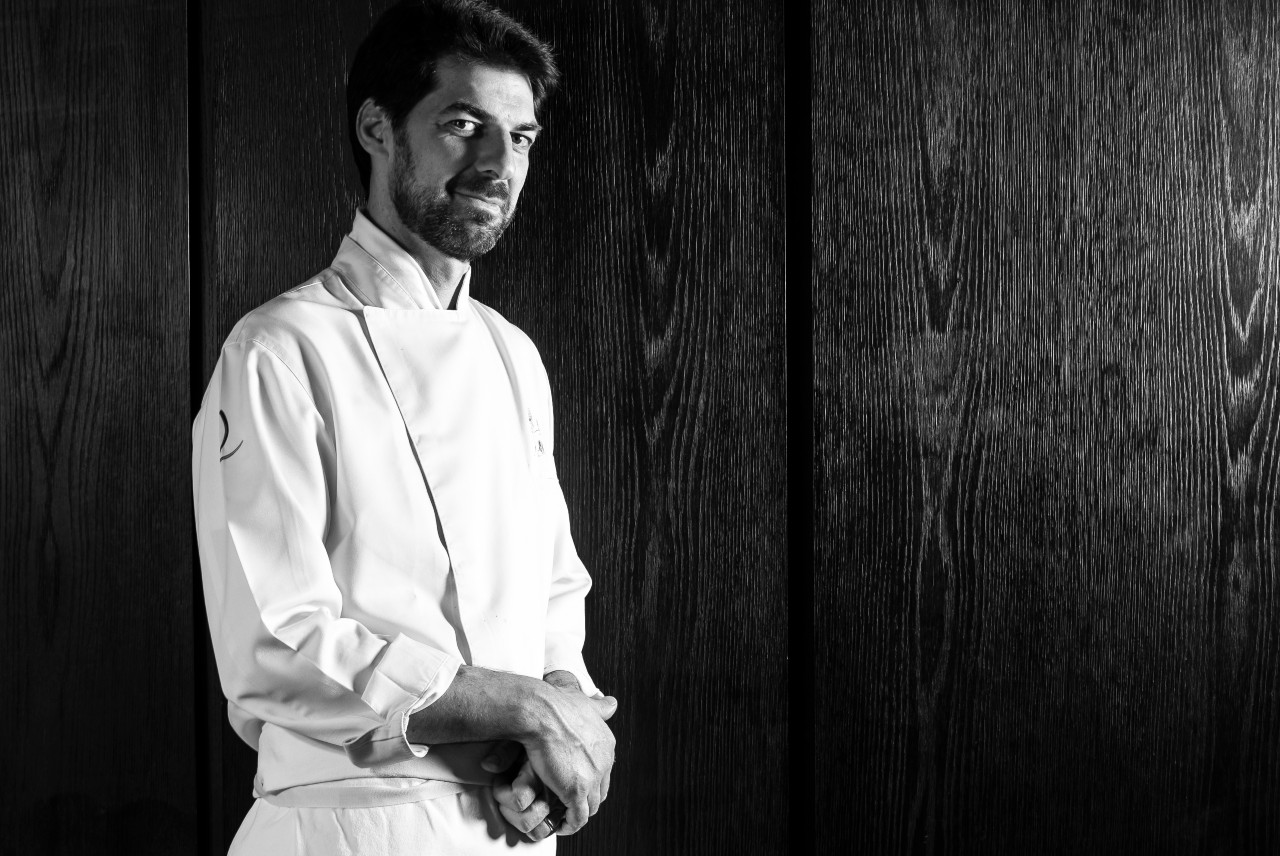
"For poetry, youth is not enough: boyhood is needed!" wrote Giovanni Pascoli. And we must 'disturb' the poet himself to understand the world Alajmowhere the focus on the role of play and surprise, to which only as children we can truly indulge but to which we yearn to return every day, plays a fundamental role.
Involves all the senses the cuisine of Le Calandre; and while it is easy to get swept away and let go of the memories, emotions and sensations that the dishes provide, one has to stop for a moment to really understand what triggers the magic of 'childishness'.
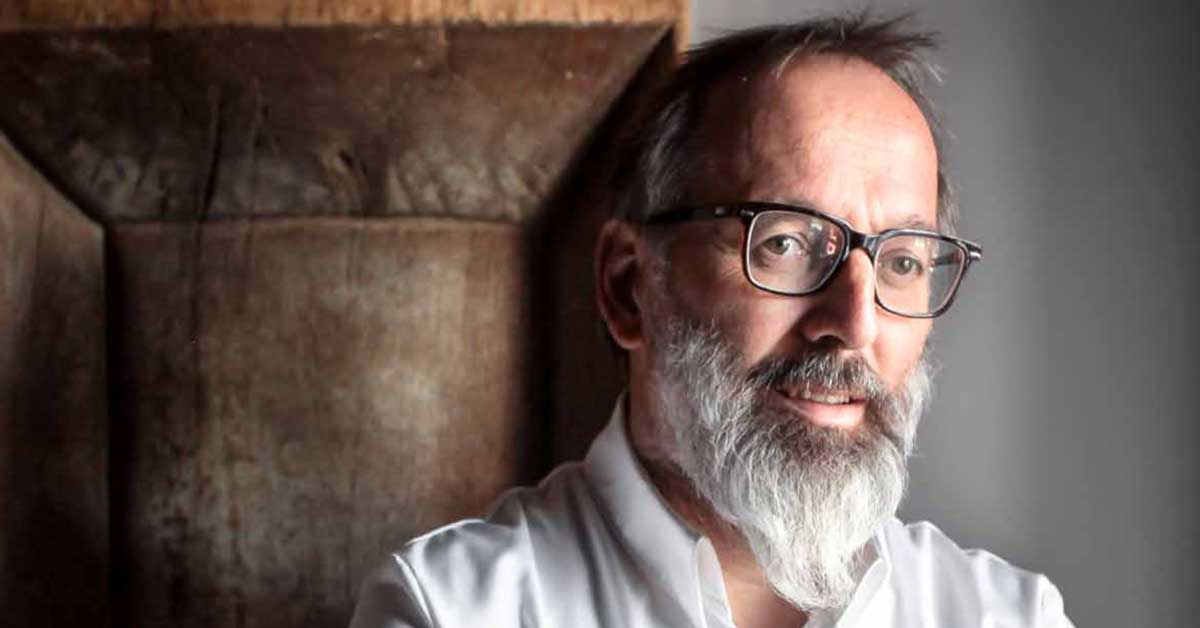
The pen that tells the story is obviously not Pascoli's, but that of Massimiliano Alajmo. And it is precisely by playing at being children again that we begin our journey with the chef whom some have described as a 'pure chef bordering on (and often centring on) genius', to discover the essence of the cuisine of the Alajmo familywhose history dates back to when grandfather Vittorio set up his cheese counter.
Tell us about the child Maximilian, about your earliest memories of family dishes.
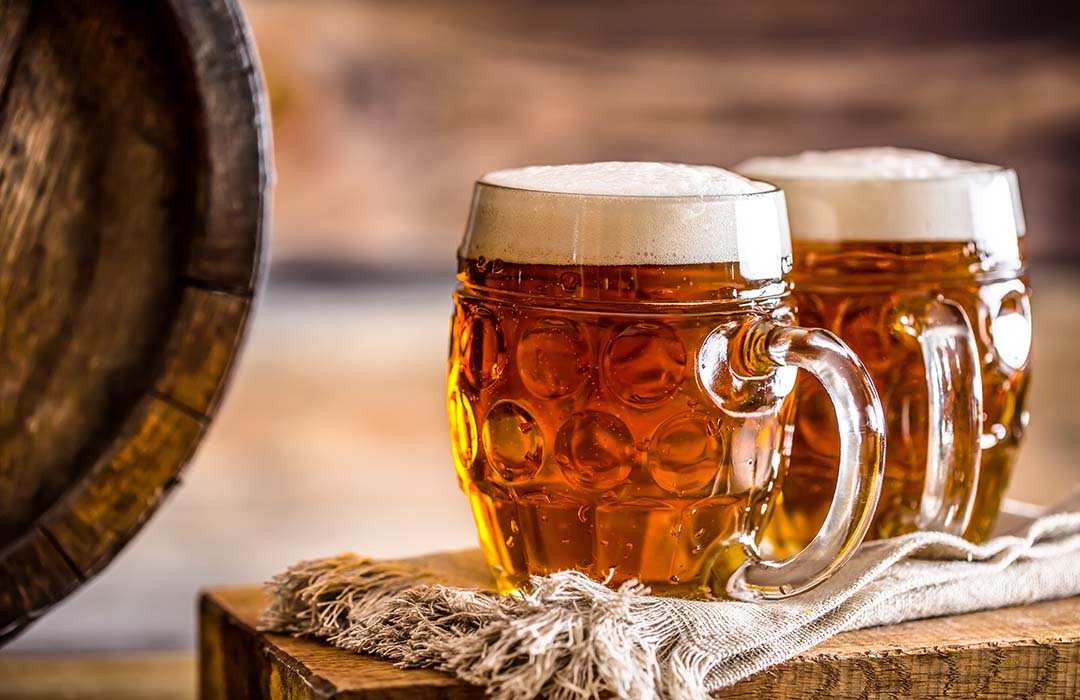
'I have always been very close to my grandfather and the more time passes, the stronger this bond I feel. Le Calandre is the same place where I used to visit my grandparents when I was a child, with my brothers. At the time it was called Aurora and from Ponte di Brenta, where we lived and where my father Erminio managed Le Padovanelle, a very avant-garde hotel with a starred restaurant, we would come here, and I couldn't wait! My first memories of dishes are those we ate at family gatherings. Paduan soup: a bean soup with braised beef rump, which was first blanched with paprika; and there was apple, beer... Cubes of beef, full of flavour, very strong, dipped in this wonderful soup. It was a dish of my uncle Giovanni, who always showed genius in the kitchen! Or rigatoni alla campagnola; fresh cream was used a lot in those days, but the real speciality of this dish was that it had a lot of vegetables inside, and then there were the ham shanks. The parts most attached to the bone, the gambetto in fact, were minced and then blanched and added to the vegetables: carrots, peas and the courgette which was fried in oil and then left to settle in the extra virgin oil. It bounced an emerald green colour... in short, it was an extraordinary pasta!
When was your very first entry into the kitchens?
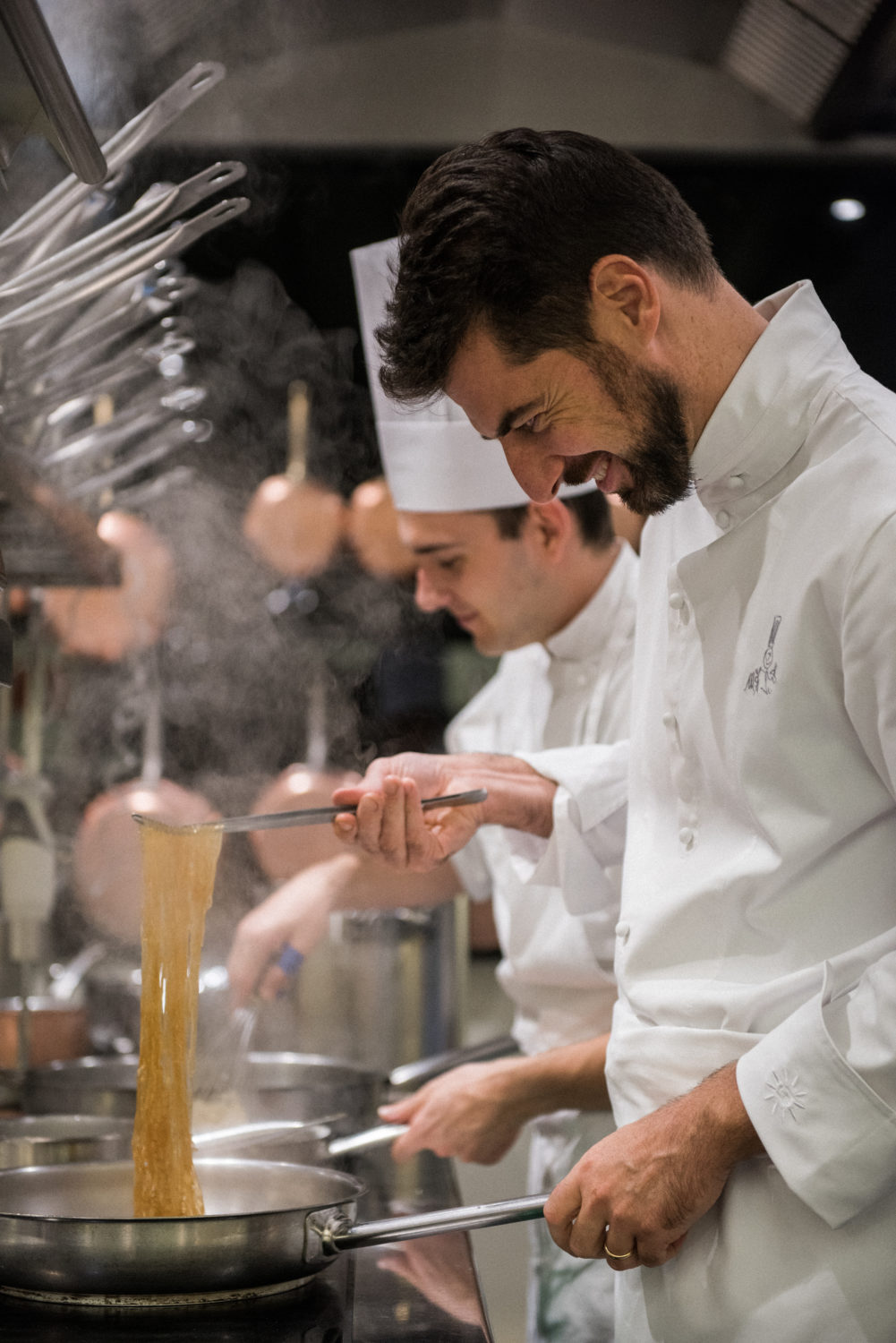
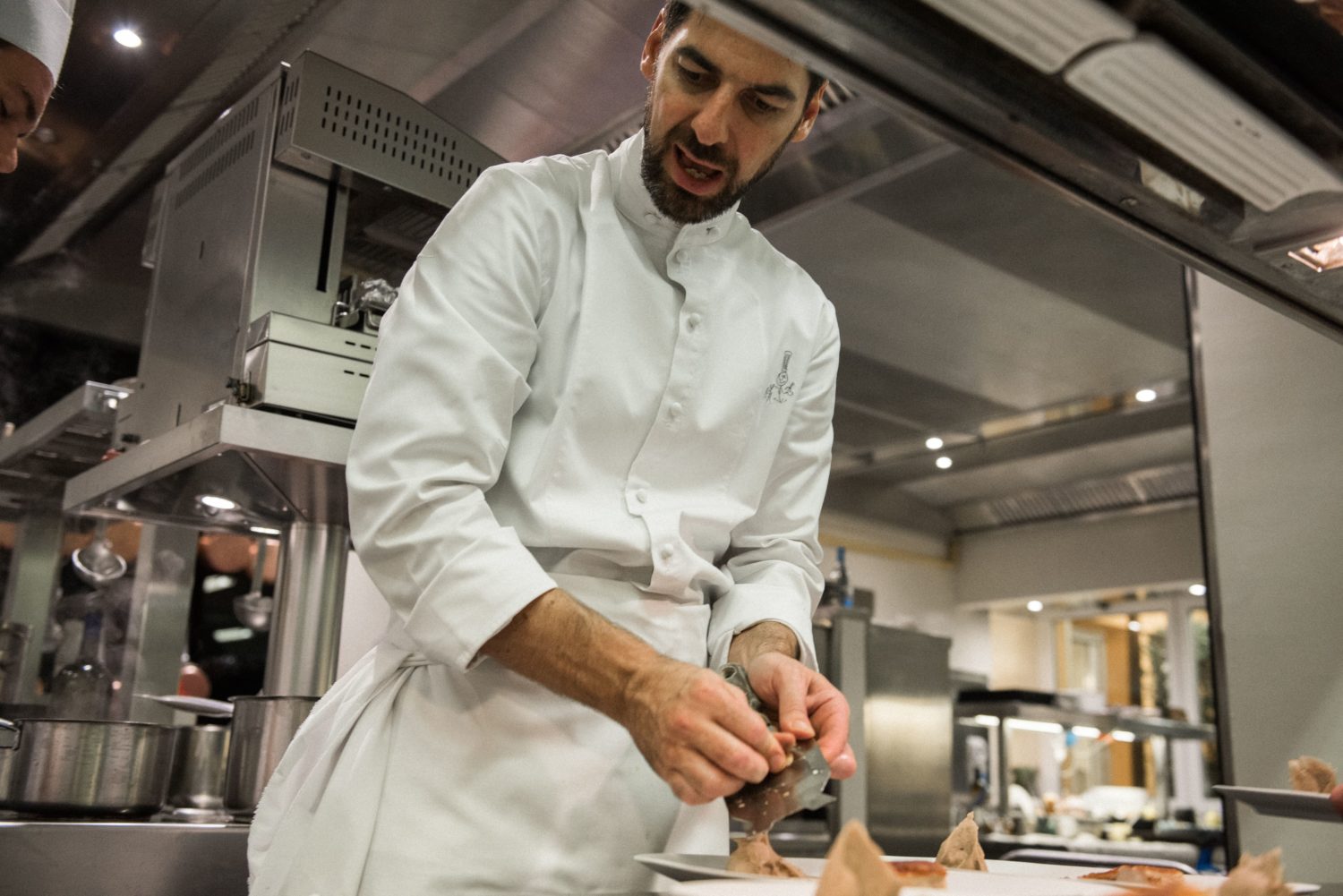
"I was about five years old. After school, in the afternoons I would come here to the restaurant, where both mum and dad were working at the time. My brothers wanted to stay outside and play, but I would run into the kitchen with Mum Rita to make biscuits. I remember a big marble table, with an oven behind it, the first burn that made me realise that it wasn't all sweetness! Mum tried to chase me away but then resigned herself, because I wanted to be there, to see her making bread and cakes. There were glass jars that were brought into the hall, with biscuits inside. My brother and I would sneak them - we ate tons of them! Every now and then I would ask my mother to make us one of those biscuits, but we still didn't have the privilege of tasting them again! Then, little by little, I became the mascot in the kitchen: there was the one who locked me in the cell, the one who blew up my crepes... and I dreamed of wearing salt and pepper trousers, the very ones I started wearing again today'.
Let's take a leap forward in time and come to today. Tell us about Alajmo's cooking. 'There is no truth but that contained in the ingredients' I read....
"We have published two books that are very important to us in which we have tried to condense our idea of cooking: Ingredients and Fluidity. Ingredients starts from the concept of ingredi: penetrating matter, listening to it. The sentence you quoted is from this book. It means that every matter contains an outer part and an inner part. As if matter is a reflection of the macro in the micro, so inside you can find all the references to the principles that move the world and existence. You find all the answers you seek if you observe matter, if you analyse what its change, its metamorphosis, might be. All the principles that we apply on a daily basis manifest obvious truths in some way, but they escape us. If you think about the very simple operation of bread-making and go upstream, as we did when talking about when I was a child, well, when bread was a child it was wheat, before that it was seed, and even before that it was soil. There is a transformative process that leads the grain of wheat to become nourishment, to become bread. It kneads, it undergoes a fermentation, and thus a true metamorphosis. It is matter that becomes different from itself, feeding on the contamination linked to water, which is the vitalising element. One of my great masters, Gianni Frasi, introduced me to these reflections through espresso coffee, which is the supreme expression of coffee. Espresso coffee is nothing but a precipitate that manifests itself in the cup in two forms: a superior form and an inferior form. The superior form, which Gianni called the heavenly Jerusalem for its golden reflections, is the crema, which has 8-10 seconds of maximum aromatic expression. And it is in those few seconds that we can grasp the apotheosis of this precipitate. The lower part, on the other hand, is the dark part. Again, if we go upstream, the coffee bean is what? A green bone that is first subjected to fermentation and then to what Gianni used to call the lava io with fire, or roasting over an open flame. It is at this moment that the bone undergoes a true metamorphosis: implodes and develops a series of aromatic charges that it did not have before, or at any rate were not perceptible. Finally, through the burning of water, with the espresso machine, we have a further change of state and the sublimation that manifests itself through that precipitate of which we drink at least a cup every day. Still speaking of the inner part of matter then, there is a very important teaching of Paracelsus. I often give a practical example. Try rubbing a mint leaf between your fingers vigorously. If you look at the leaf, which is green at first, you see it gradually darken until it becomes flaccid and then, if you leave it in the air, it becomes dry and more and more brownish until it pulverises and dissolves. If you look at your hands, you can't see anything, but if you bring them close to your nose, you perceive the essence. There, that is the invisible part of matter. It is a simple but intriguing exercise that gives the measure of the animating force of matter, that which we have before our eyes every day, but which we often do not consider and therefore limit to consumption. Ours is a consumer society: we produce waste and do not produce relationships. In reality, food is much more, food has a marvellous, universal 'I' language, it does not only contain
calories or mathematics, but it has much more: it is a cultural and emotional vehicle, rich in meaning, mass i. And if it is well used, it can become an extraordinary tool for relationships and also for nutrition in a much broader sense'.
And Fluidity?
"It is the synthesis of three concepts: liquidity, depth and lightness. Why fluidity? Because it is flowing with matter in a way that must be natural. Just as water moves freely, without being able to be contained, going where it has to go, in our gastronomic intent is to be almost spectators of the matter: listening to it and trying to highlight what the matter wants to tell us, without trying to be the protagonists. What I firmly maintain is that basically the cook, by touching it, can only ruin the matter! Matter is an ultimate expression and, the moment you touch it, you decide to interrupt that wonderful energy. A bit like the photographer, who cannot fully capture an image but can give a point of view of it, in the kitchen we are aware that matter in itself contains a beauty of a higher order and we can only photograph certain elements and try to make them much more visible, accessible, penetrable. Like hooks so that we can immerse our guest in this wonderful world'.
You spoke about the language of food. What is the language of Alajmo cuisine?
"I think there are many languages in cooking, many interpretative possibilities. Cooking is introspective and you can find in a dish what you are looking for, you can travel according to what is your emotional field, your history, your memory that I, who cooked that dish, may only know partially, or I can intuit, intercept, but I certainly do not have the same experience as you. So there is an introspective measure that is part of an uncertain language. In the sense that I can make a preparation that stimulates an important memory reaction; my intention was to give you an emotion and I succeeded, but I certainly would never have realised that I could get there. Because there is a mediation, a relationship that is created between the one who prepares and the one who receives. The first most beautiful restaurant we all go to is the mother's breast. And that kind of nourishment is a nourishment that we carry within us for a lifetime. And that is one of the areas of research we have done'.
The cuttlefish cappuccino...
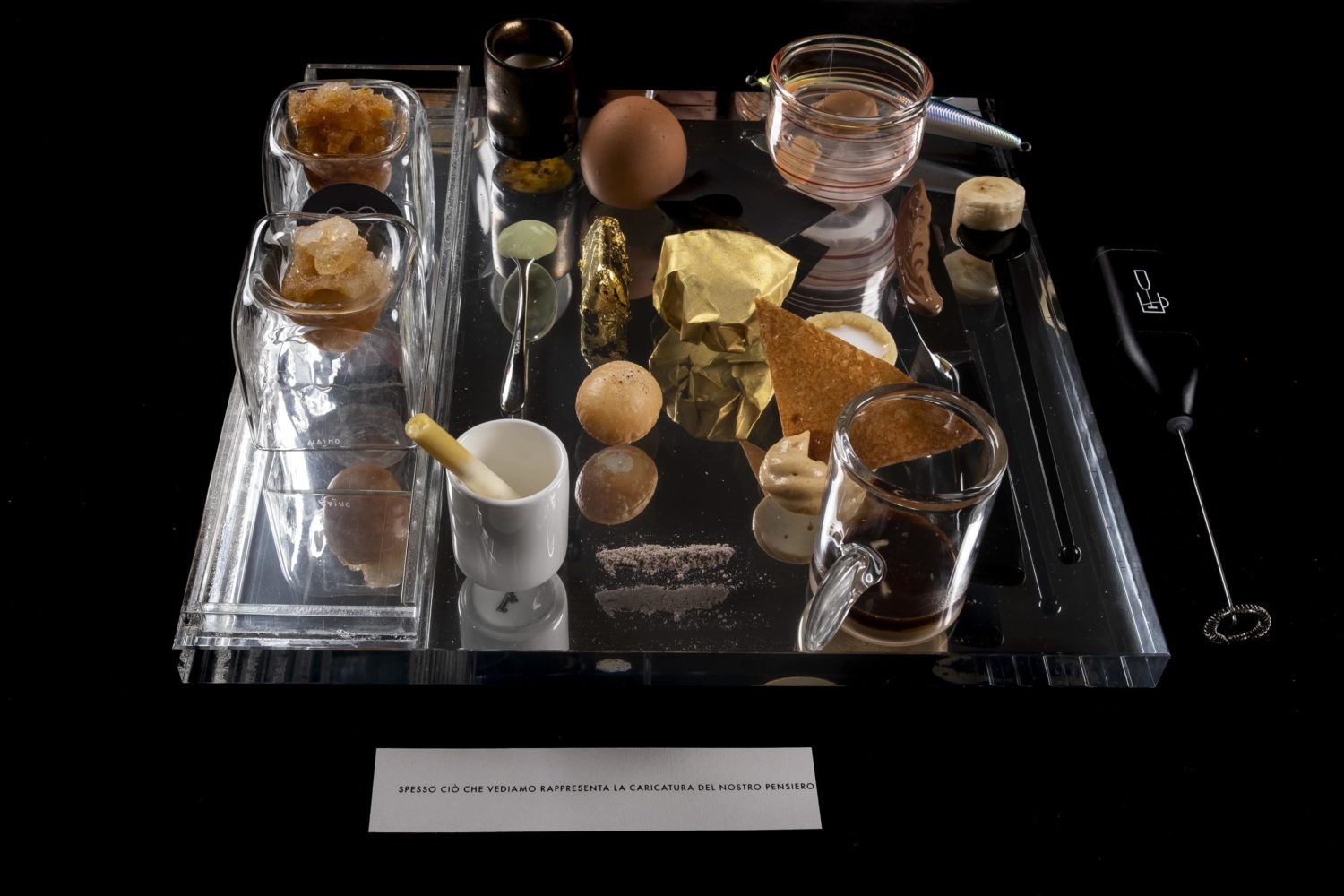
"Yes. We serve it on a placemat with the phrase first taste, because it harks back exactly there, to the mother's breast. It is a lactic tactile palatal sensation that inevitably reminds you of the kind of sensation we had in the first phase of feeding. How then can everyone interpret it? If everything has gone well, it is an element of great reassurance and is, moreover, the element for which French cuisine has had great worldwide acclaim. Because this lactic sensation is necessary for man. Because man wants reassurance; especially at mealtimes we need to find something that communicates peace. Then there are those who take the springboard to make the next leap, so through that dish they fly into another dimension...'.
Is this an example of a language choice you have made then?
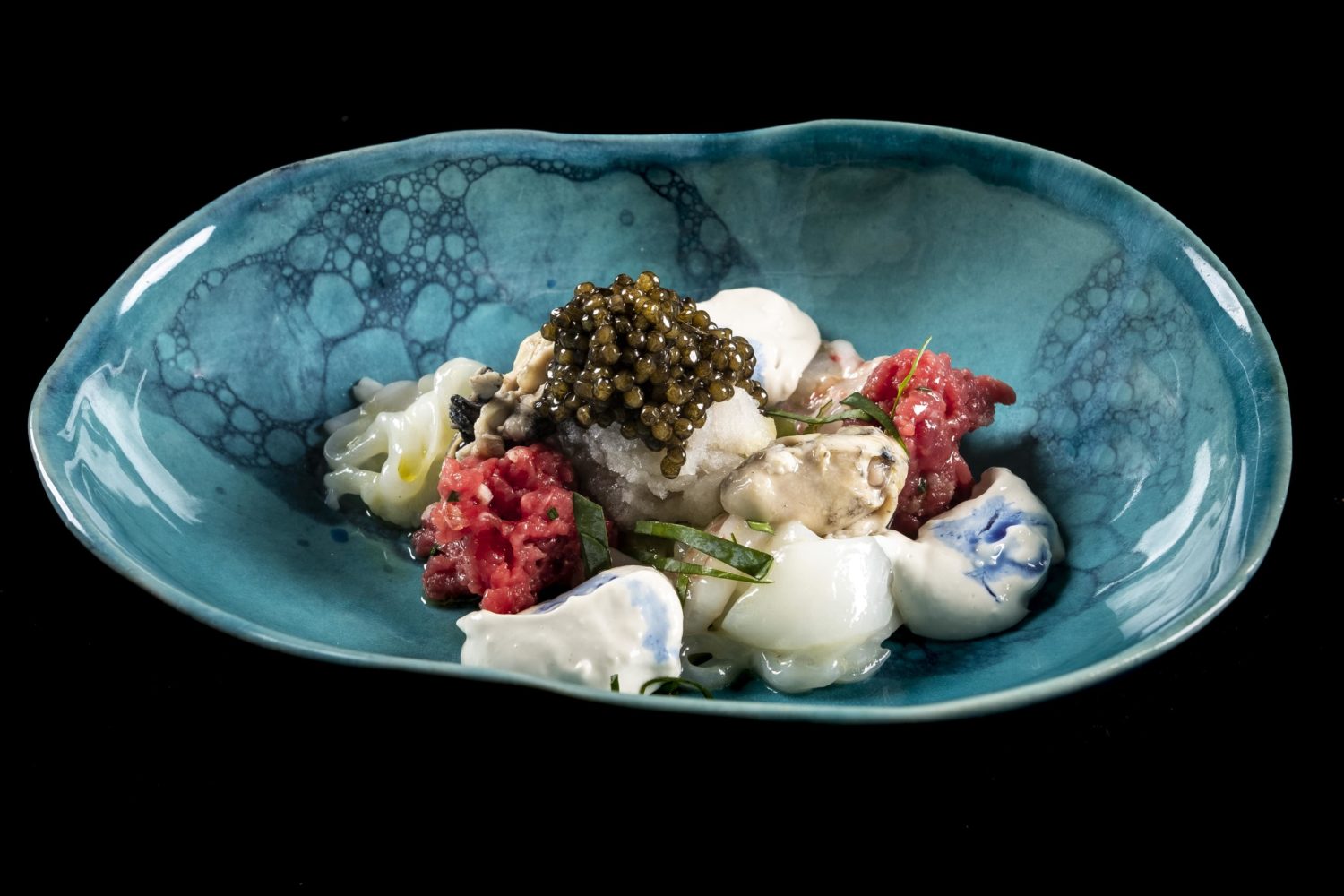
"Exactly! And we did it by playing with this feeling, exploring the lactic world and bringing it back to the plate without using dairy products, looking for the mother in the plant environment, or in the marine environment. And still talking about language, let's think about how many interactions there are within an environment that can combine with a dish. The humidity, the temperature of a room, the smells, the materials with which I enjoy that dish, the temperatures of those materials, the porosity of a dishcloth, the perfection or imperfection of the dishcloth, the intensity of the light, a warm or cold light, sweet or sour music... All these things interact much more definitively than we can imagine, they trigger mechanisms in subtle tasting. We don't realise it, yet they intensify one sensation or another... So there are a series of languages that intervene and contradict the idea that there is a single language in cooking. There cannot be a single language, because there is relationship'.
Talk about exploring the lactic world. Almond Mozzarella is a dessert that plays on this through the almond. There is no milk... And here is another important concept and language of your kitchen, the play...
"For us, play is a serious thing! We have always played a lot in the kitchen and with guests. Because play is the simplest, lightest way to deal with deep thoughts, to bring out what is really pulsating. Almond mozzarella is an important conceptual extract of what we think about cooking. From an olfactory point of view, it has all the compositions that really remind you of mozzarella, because there is an aromatic reconstruction that deliberately plays on the visual images of mozzarella: oregano, oil, basil, olives... All these things remind you of an image, of a gastronomic stereotype that you have registered in your head. The moment you go to touch it, however, you have a rebound element: there is no softness but crunchiness, and the moment you see the mozzarella, it crumbles, you stop for a moment and you have the rebound: your dream vanishes to leave room for another dream. Man needs to dream, to feed his mental space with unfolding images that are always full of hope, beauty, light and energy. Life puts us before situations in which the reaction must necessarily be one of rebound. And so in the almond mozzarella game there is so much of what existence is. It's like when you joke with a friend and by joking you can pass on images and messages, in a light, frugal, subtle way, which only if received with that lightness can become extraordinary energy. Play, in short, is a fundamental ingredient to nourish beauty and it is also the way to be able to see the saddest things in a different way. It allows you to get to that glimmer of light that turns everything upside down...'.
What is truth in a dish?
"The one you have inside!"
And what is the real sixth sense?
"The sense of immortality," said Gianni. We have five senses and in the kitchen it is wonderful to have synaesthetic experiences. But what is the goal? That of going beyond, of finding the sense that moves the five senses. It is the animating part, the part of true light, the part that makes you vibrate. This is the sixth sense, intercepting the vibration before it is even born'..
"The poet is the one who expresses
the word on everyone's lips
and that no one would dictate'.
Giovanni Pascoli.
PH Credits: Marco Peruzzo
PH Credits: Sergio Coimbra



 English
 Italian