

I like stories. I like listening to people who have the courage and the desire to tell, to tell their stories, from the heart. Through stories they touch your, heart, and when they leave, your mind remains full of their words, which turn into inner wealth and knowledge, of those people you have listened to, but also of the world they have told you about. Once upon a time there was a little old man. He stood in his garden and carefully and patiently planted a tamarind tree. A young boy, curious as he watched him work, approached him and asked: "Why are you planting tamarind? Do you know that it takes 70 years to grow? You will never see it bloom...".
The old man looked up, stared into his eyes in a smile and replied: "In this garden those who have lived before me have left me many plants, many fruits that I have cared for and loved; and now I want to leave a gift to those who will come after me, other fruits to grow and care for".
It is not enough to use the products of our land; we must know how to enhance them, hand them down, not let them disappear. Loving the land, the land of all our beautiful Italy, means not letting it be lost, taking care of it and making it better, for us and, above all, for those who will come after us.
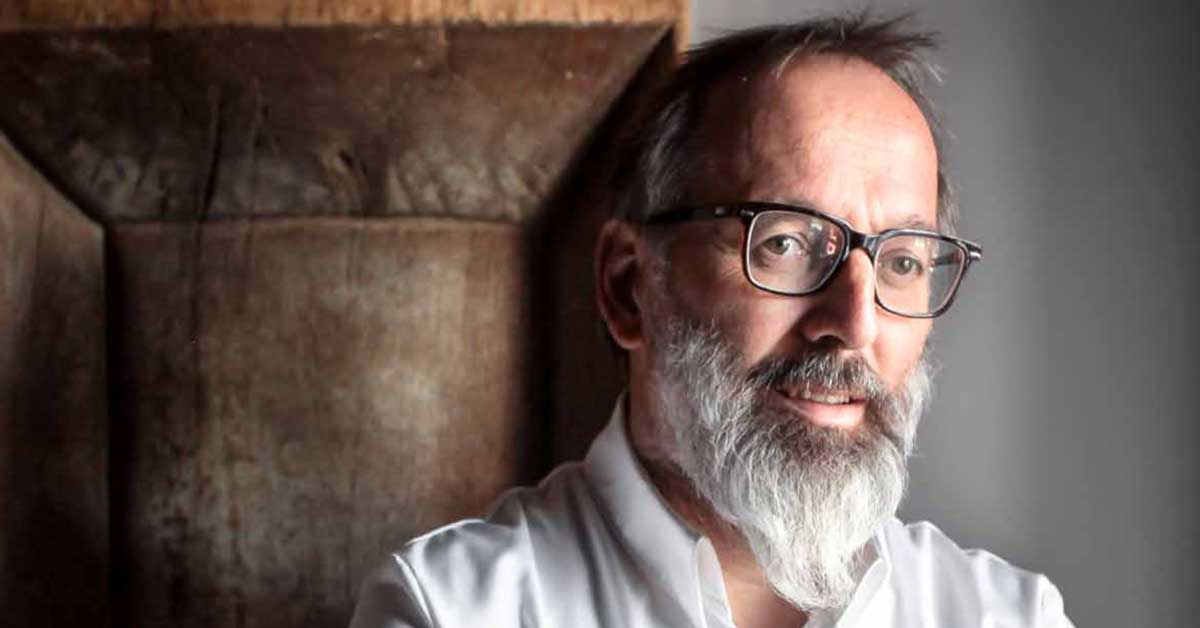
Carlo Nappo he loves making others feel good, perhaps more than himself. Through cooking he wants to give, just as his 'masters' have given to him, and even more, because giving smiles and contentment, serenity and pleasure, makes him feel good. He does this in a continuous quest, to improve every day not only the dishes but first and foremost himself.
He is the one who told me the story of the old man who planted the tamarind. For him, one is not born a cook, just as one is not born a doctor or a lawyer, but one becomes one through experience, knowledge, and continuous work, on oneself, in fact, and on the raw materials that then, processed, give life to the dishes. "If you choose with your heart the job you want to do and then afterwards, every day, what you do gives you emotions, it means that you have made the right choice"., he told me. And here begins another story, his own, which at only 32 years old sees him chef patron of two restaurants: Alla Catina in Pordenone and the Podere dell'Angelo in Pasiano di Pordenone.
The story of a young man who decided at the age of 13 that he wanted to be a cook but who then really fell in love with this job when, while working in a restaurant, he realised the importance of the gesture, saw and understood what lies behind the construction of a dish. The spark of the desire to create and to give has never been extinguished and today his gourmet restaurant at Podere dell'Angelo is called Matter Soul Heart.
"It is not a simple slogan as it may seem to some," he explains, "The Matter
has a soul and should be used with the Heart. That is the true essence of those three words'.

The Soul of the raw material, of the products, Carlo Nappo he has breathed it since he was a boy. Maybe it is not what he believes, but I have always thought that souls recognise each other, that they are meant to recognise each other. And while his experience in the Orient certainly revealed to him that cuts are important for taste ('In a cut courgette, the amount of green compared to white has the power to change the flavour and thus condition the result of the dish') and that his 'first masters' taught him that a cook must have visited a pasta factory, a slaughterhouse, a dairy, and know the material well to really know how to cook, the result in the dishes would not be the same if his soul had not naturally and instinctively fallen in love with that material.

In the end, it is not true that he does not believe this, because when I asked him how a cook balances his tastes with those of the customers whose dishes he has to serve, he told me:
"I simply use my heart. I choose the ingredients, work them and put them on the plate. I do these three things with my heart and people sense that. The combinations are subjective, perhaps relative. The real magic, which is also a challenge, is to always, every day, put your heart into the dish. This makes cooking not just technical, but emotional. And when what you eat stirs your emotions, that makes all the difference.
But there is always a little more heart to bring to the kitchen, a little more emotion to put on the plate, and this is what brings Carlo into his world every new day: the desire to make that cuttlefish ink cream even more 'cuttlefish', a risky combination experimented only and first for himself, the Ramen made Friulian, the revival of an ancient tradition in which a product is transformed into pearls or sponge, but also the natural suggestion of a freshly caught snapper made distinctive by a touch of lime.
Carlo Nappo never forgets, and never stops reminding you, that you have to know the basic recipes of cooking before you get there:
"You have to learn recipes from people who made them a thousand years ago and made them for a lifetime. If you don't know how to make a custard, if you haven't made it hundreds of times on the stove and scrambled it as many times, you'll never be able to bake it in a vacuum...".
True, genius alone is not enough, but he, also thanks to that genius, the soul that met matter, and the heart that he just won't stop using, will perhaps have many more stories to tell his grandchildren.
Ph. credits: Renzo Dameluzzi





 English
 Italian