

The 'witches' bread' in Emilia is not a unique and unambiguous product: it may indicate different types of bread or dry bunsoften baked directly on the oven stone, prepared with a few ingredients, flour, water, salt, sometimes a drizzle of oil or aromatic herbs, but whose function went beyond nourishment. This type of bread was linked to protective customs, rites of passage and liminal moments in the farming year: from the St. John's Night (24 June)considered magical, on the eve of Epiphany, when witches were thought to fly in the skies. The name itself has a popular origin: it was the poor bread, made with leftovers or the first batch, that was given to children or animals, but also, according to some tales collected in the Apennine area, to keep witches away in the night. The oven, in domestic symbolism, has always been one of the focal points of the peasant home. Energy, fire, femininity and transformation were concentrated there. As anthropologist Marina Montesano in its essay 'Witches. Origins of a Myth'., many of the accusations of witchcraft between the 15th and 17th centuries in Italy revolved around women's culinary skills and domestic spaces: kneading bread, using herbs, managing the fire were actions viewed with ambivalence, especially if performed by women alone or outside the social norm. In Emilia, it was said that some witches would break into other people's ovens to steal the 'power' of bread. The apotropaic rite of preparing a first 'fake' or dry loaf, to be burned or left outside the house, served to symbolically distract or 'feed' the night spirits.
According to the scholar Claudia Baracchi, author of 'Eros and Philosophy', bread has always been an archetype of regeneration and the relationship between human and divine. In the Emilian rites of the summer solstice, along with the use of St John's herbs and perfumed water left for the moon, a simple bread was often prepared, enriched with wild herbs gathered in the fields (rosemary, marjoram, fennel), and offered to the fire or broken in sharing, as a gesture of protection and fertility. One of the best-known tales from the Parma area narrates that, on midsummer night, witches would roam the fields in search of unripe grain, to be used for kneading a 'forbidden' breadwhich if eaten by a human would make him blind or forget his own name. This bread, according to legends, was left on smooth stones near the woods, where the older women of the village went to 'deactivate' it by throwing it into water or fire. Curiously, the 'witches' bread' has also undergone a recent gastronomic rediscovery, unrelated to the ritual context but inspired by its mysterious aura. Some artisan bakers in Emilia offer thin focaccias flavoured with herbs as 'witches' bread', presenting them as homage to ancient traditions.
In the kitchen today, they are reinterpreted with wholemeal or spelt flours, spontaneous herbs (such as nettle or rue), and are presented in gourmet contexts linked to 'ritual food' or archaeogastronomy. It is not uncommon for ethical restaurants or holiday farms in Emilia to make it their signature dish in June or December, coinciding with the most 'magical' times of the year. Beyond the anecdote or folkloric narrative, the witches' bread becomes a metaphor for a female knowledge that is buried but has not disappeared. As Silvia Federici points out in 'Caliban and the Witch' (2004), women accused of witchcraft in past centuries were often custodians of an agro-alimentary, herbal and reproductive knowledge that was marginalised with the advent of official medicine and patriarchal religion. That bread, made with little, baked quickly, broken at sunset, was also a form of resistance: nourish with what you have, defend yourself with what you know, protect your home with what you make. The 'witches' bread' is not just a food, but a symbolic knot that unites hunger, faith, fear, heritage, fire, secrets and survival. A poor food, but rich in meaning. Eating it today, consciously, recovering its memory, means honouring the voice of those who, over the centuries, have cooked against the wind, leaving in the ovens and in the stories a living mixture of secrets, stories, desires and freedom.


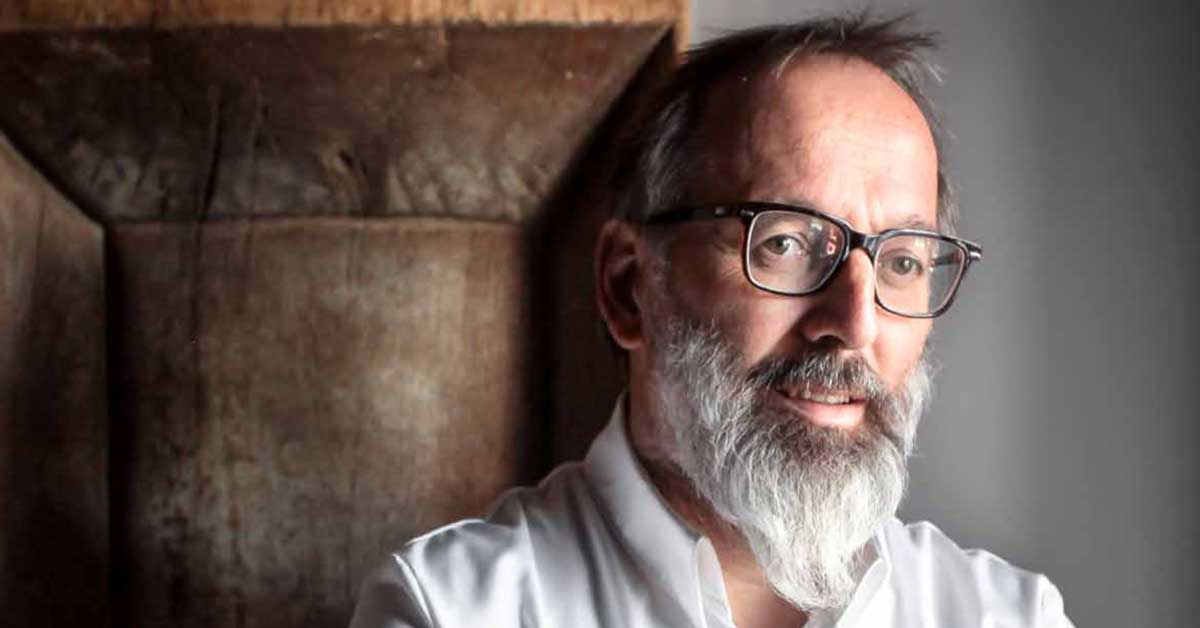
Gualtiero Marchesi, the man who changed Italian cuisine
He was the first to win three Michelin Stars, the first to return them. An unsurpassed master for so many chefs, who became



 English
 Italian