

La Itria Valley is the beating heart of Apulia, the most characteristic part of a region that expresses, in its tapered shape, all its variety and identity. And this is the wildest and proudest part of a land that has so much to say in every aspect. Here, sight and smell are the first senses that are tickled as that heart begins to beat.
Expanses of earth ambered by the presence of iron and clay set the stage for the mighty centuries-old olive trees, gnarled and silvery under a deep blue sky that on the horizon merges with the sea. And from that sea, the light wind that crosses this strip of land carries with it the scent of the waves, which, on its journey inland, is laden with the fragrances of almond blossom, plum, native vines, rosemary and aromatic herbs.
In this extraordinary landscape lies an equally extraordinary place, which has made beauty and hospitality the key to its now international success. We speak of Borgo Egnazia, a place that is difficult to define and even describing it becomes too reductive and stringent, how much better to experience it in order to assimilate all its infinite suggestions and nuances.
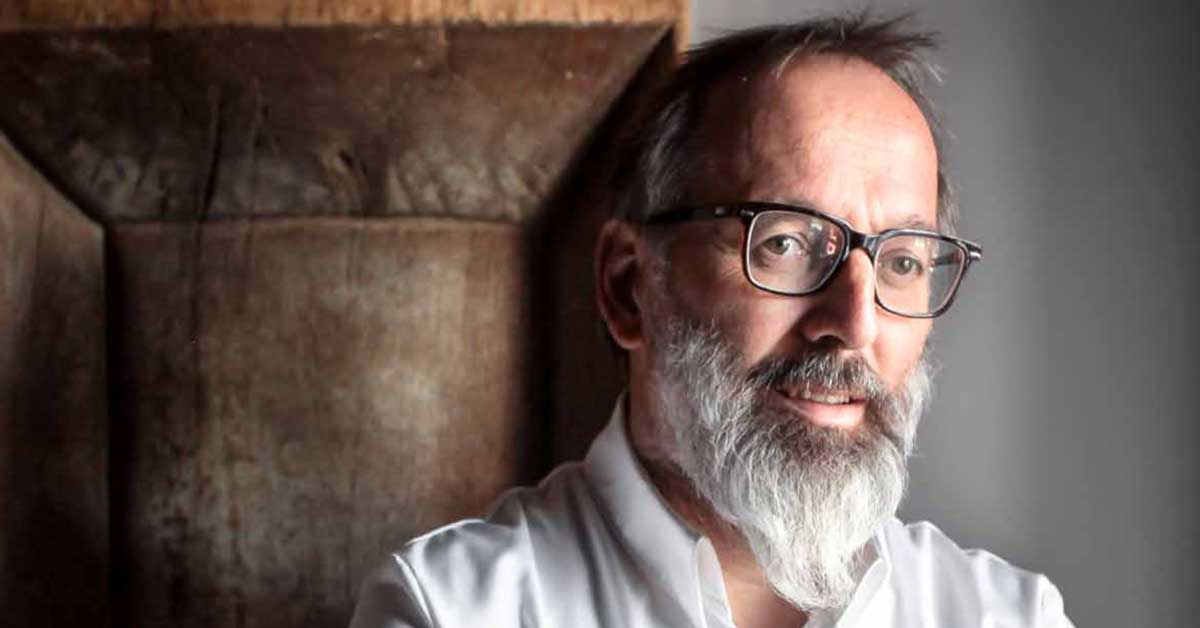
Apulia, Itria Valley, Borgo Egnazia. As in a game of Chinese boxes, this last casket reveals and encloses another precious pearl. It is the restaurant Two Chimneysled by chef Domingo Schingaroawarded this year with a Michelin star. Workaholicism, great dedication to work and the charisma of a leader. This is the immediate portrait that a professional like Domingo Schingaro who, when we ask him to take some shots, does not hesitate to call his entire brigade: 15 guys with whom he shares not only hours of work at the Two Chimneysbut also its success.
"An achievement that was not possible without long and hard star work really shines on everyone, from the owners, who were always far-sighted and with whom a relationship of great mutual trust was immediately established, to the boys. And then, a special dedication goes to my wife and family, without whose support I would not be here now.".

The first compliments come from Dr. Aldo Melpignano, the creator, together with his wife, of the whole Borgo Egnazia project: "First of all, I would like to thank Domingo Schingaro, Andrea Ribaldone and the whole team once again. It was a great pride for us to bring this Star to Puglia, and it was certainly a new boost for our work, which has been enriched with renewed enthusiasm. It is an important milestone, but above all a new starting point to continue developing the Due Camini and Borgo Egnazia gastronomic project, increasingly a reference point for Apulian cuisine and Mediterranean food culture.".
Then, a mention of the climate of total trust and mutual esteem that accompanies the team of Borgo Egnazia: "It is the people who make the difference and give true value to a place. Domingo is not only a great chef, he is an extraordinary person and a hard worker. He is also very humble and always open to dialogue and confrontation, qualities that I have rarely found in top chefs. I am very happy that he is part of our team and I enjoy being amazed by his creations and ideas.".
A special thought, then, goes to my friend and teacher Andrea Ribaldone, the chef who first brought Domingo Schingaro's talent to light: 'it was nice to hear all his happiness and excitement about my star, satisfied with the work we have done together over the years".
Humility, willingness to challenge oneself, tenacity and the ability to be a natural leader: these were the qualities that chef Ribaldone immediately noticed in his Apulian friend, who has come a long way, having also had important tests such as the Expo, where in addition to his culinary skills, Domingo demonstrated great organisational and coordination skills: "Expo was an incredible and also difficult experience. Every week the chefs and their kitchens changed and you had to be ready and clear-headed to face the twists and turns and all kinds of problems".
Thus begins, accompanied by the chef, this journey into the flavours, aromas and very identity of the "Two Chimneys" a Borgo EgnaziaA journey that starts from the plates, in the sense of the supports for the dishes, unique pieces of handmade ceramic, which re-propose in their shapes and details, those used in the Apulian tradition. The work of the Grottaglie artist and craftsman, Vincenzo del Monaco, the dishes present spontaneous material forms, that is, dictated by the course of baking in the oven, and have 'fake scars' on the surface, to remind us of that not so distant past, when in a logic of recovery of everything, there was the trade of 'theCunza Crèst"or he who repaired dishes by literally stitching them together. A kind of Italian Kintsugi that today allows those who come to eat at the Two Chimneys dishes that are true works of art in every way. Even the appetisers are served in ceramic bowls that, like jigsaw puzzles, reproduce the shape of Apulia, already heralding a gastronomic journey that will involve the entire region from north to south.
Even the mise en place is designed to have the suggestion of the land of Apulia and the atmosphere of the restaurant itself, in addition to class and elegance, conveys welcome and warmth. Then, Domingo's reign, the kitchen, a large and well-equipped space from which his gastronomic creations emerge, dishes from memory, from memories, rethought in a new key, fragrances and flavours that are the very identity of a people and its time, its history.

This is the place where chef Domingo Schingaro he is more at ease, where he hardly feels tiredness or stress, as he himself says: "When I arrived here I immediately told the property that if were looking for an 'office' chef was not me. I like being in the kitchen, I always like to put my hands in, I like having a close relationship with the guys in my brigade. I don't really like to leave the Borgo, I prefer to be here all the time and I often have to force myself to take a break. In short, I feel really good here...it's my comfort zone, I'm a sort of happy hermit of the kitchen....".
And, speaking of cuisine, it is the triumph of memory. In chef Schingaro's dishes there is all the love for Apulia, the love of a professional who set off around the world as a boy in search of his own way, only to return to a land that, as Domingo himself recalls, has an incredible variety and quality of raw materials.
Here, then, sheep ravioli in pignata are enriched with the scent of the sea with a langoustine fumet and a burnt langoustine, while puntarelle are cooked in a centrifuge of smirnio, a very sour and bitter wild celery, served with liquorice and sweet potato. From meat to fish, via vegetables, it is a triumph of Mediterranean flair, brought to the table with modern techniques, innovative cooking, minimalist suggestions and bold flavours. Above all, it is the triumph of a 'zero kilometre' or, as they say here, 'good kilometre' philosophy, thanks to a selected supply chain that crosses the region from north to south.
Appetisers are perfumed with the scent of the sea with the soup of truffles cooked on the fire, served with bread croutons and an infusion of almond milk and water from the truffles themselves, sea rocket and field rocket. Apulia is also expressed in the vin cotto dressing the sheep's ricotta cheese, in a waffle of barley and misticanza. First courses include tagliolini with yellow turnips, mantecate with urchin cream, pumpkin oil and basil, and gnocchi made with pea puree, served with a cuttlefish broth and a layer of steamed cuttlefish. And again, the risotto with Vermuth di Borgo Egnazia with asparagus centrifuge, the lamb of the Murgia embracing the scents of chamomile and the sweetness of Polignano carrots, the sanpietro fish carrying the tradition of "saint jannièdde". A palate educated not only by studies and travel or experience, but above all by experience and childhood and an approach to work that comes from daddy Onofrio.
Son of a fisherman, Domingo Schingaro learnt from him dedication to work and humility, while from his mother Rosa he learnt to know how to create recipes from even improvised ingredients as well as how to recover raw materials without waste, because cooking is first and foremost respect for the earth and for man's work. Chef Domingo's great humility Schingaro It then becomes admiration for three colleagues that he particularly appreciates: Niko Romitowhose gracefulness and ability to concentrate on taste and create true masterpieces are reminiscent, Anthony Genovese, a chef capable of concentrating in a single dish different flavours and thoughts taken from all over the world while remaining focused on Italy and, unfailingly, Andrea Ribaldonefor inventiveness and the ability to succeed in doing ten thousand things, always perfectly.

Cover photo: Davide Dutto




 English
 Italian