

Memory and memories in contemporary dishes of unexpected experiences.
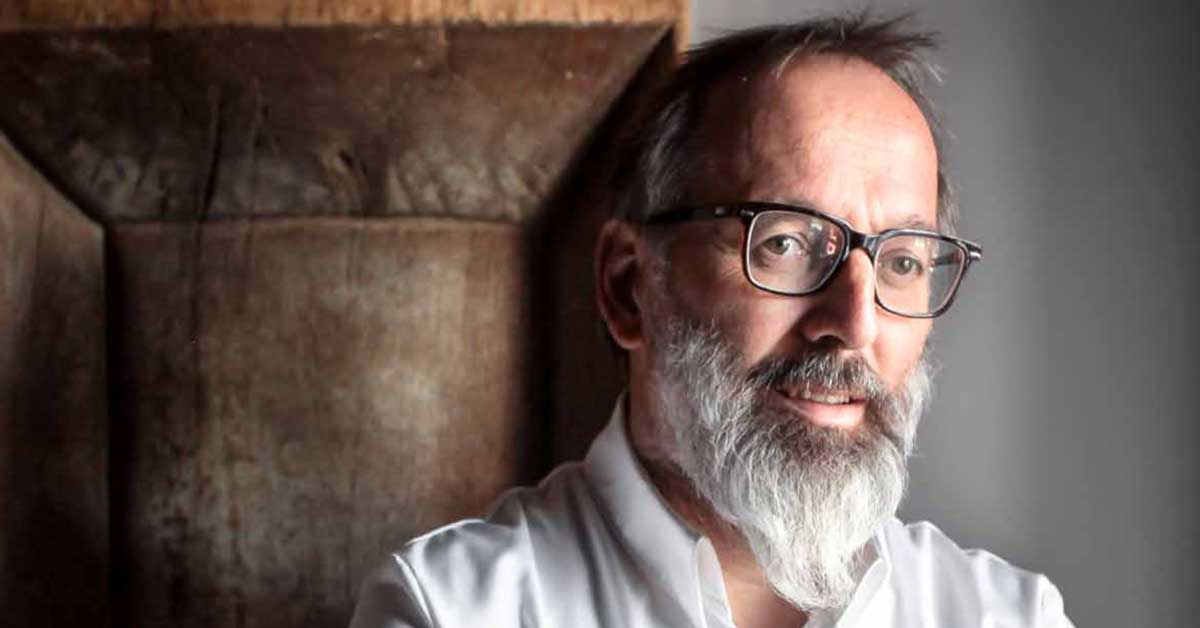
Andrea ApreaNeapolitan origins and a restaurant whose name recalls the Milanese dialect: VUNone. Apparent and intentional contradiction, because 'VUN - Andrea Aprea' is the synthesis of a philosophy that encompasses Italian culinary tradition and Neapolitan roots. But not only that. 'In my dishes is Italy - explains the chef - and I do not use products that are not Italian. I make contemporary Italian cuisine, which looks to the future but never forgets its origins'.

Thus Aprea moves away from the rhetorical opposition between tradition and innovation. He prefers to speak of contemporaneity, combining technique with experience, emotion with culture. The result is flavours that belong to us, those of our memories, which we encounter on the plate in unexpected ways: "My approach to Italian cuisine is 'traditionally innovative'. That is, I start from a concept of memory, of taste, of connection with the territory, but with a different, outdated approach. It is a combination of immediate perception and experience with the dish. My tortelli, for example, are an instant homecoming for those with that memory'.
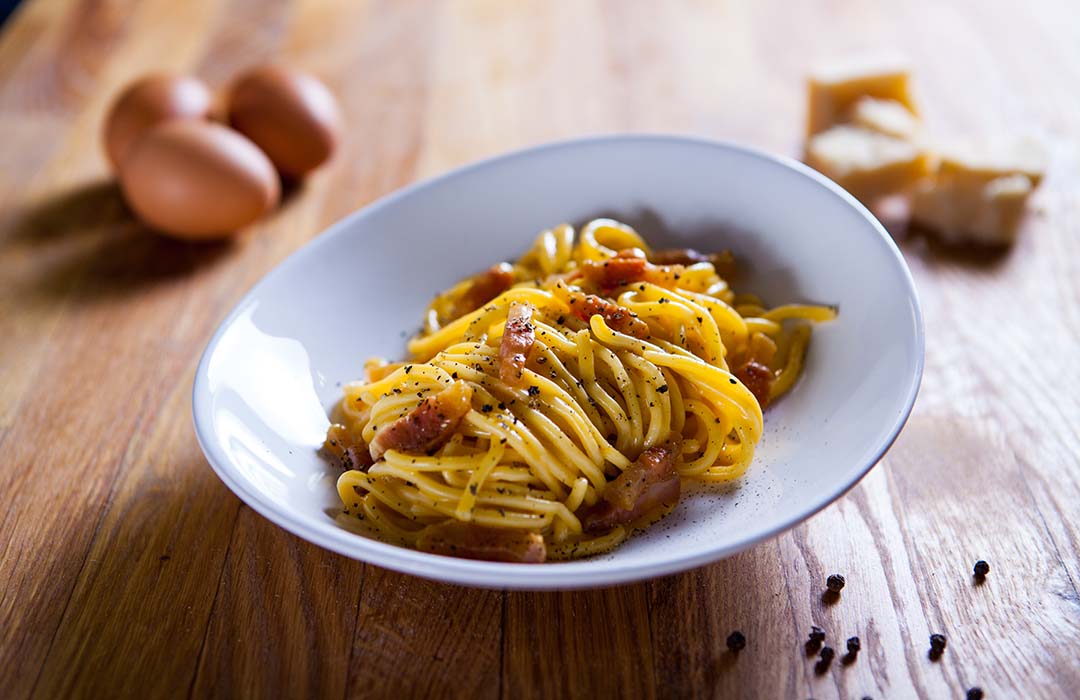
Those 'Tortelli cacio, pepe and caramelised onion'. evoke the flavours of one of the greatest classics of Lazio cuisine. La tradition but it is 'updated': an alternative pasta format, the careful selection of quality ingredients, cheese and pepper, and the addition of a new element, the caramelised onion.
Dulcis in fundo, a 'theatrical' presentation, and here is contemporaneity, in a dish that, if eaten with eyes closed, takes us back to flavours that we seem to already know, that belong to us. Tradition and contemporaneity, at VUN - Andrea Aprea, give way to each other and so on the table is served the tradition of the future: the ability to interpret the spirit of our times and build hypotheses for tomorrow, starting from memories and customs that have remained unchanged over time. Contemporary dishes that represent tradition.
And if you are wondering what the role of technology is in all this, Aprea replies that "technique counts for a lot, but only to the extent that it does not compromise taste. If technique is not at the service of taste, the balance is lost. When, on the other hand, technique is at the service of taste and taste at the service of technique, then the combination works. In my dishes tradition and contemporaneity are synergetic; the identity is Italian and the internationality is found precisely and only in my knowledge of technique'..

It is thanks to this knowledge, thanks to technique, that mozzarella, tomato and basil have become "Caprese... Sweet and Savouryancient flavours that on the plate surprise in a visionary composition, which disorients expectations and then transports us to a new and unique experience, while at the same time revealing those tastes we know and which reassure us. A dish like this is not born in an instant.
Reflection, study... It blossoms a little at a time, but starts from a fundamental. "This dish was originally created in 2008 as a cannoli made of milk leaf, with cherry tomatoes and basil. Since I was a child, I have always admired the culinary gesture of my grandmother, of my mother. The poor dishes of yesteryear, the flavour, the taste of a mozzarella and tomato... This is what we are. So, I said to myself, why go in search of things that do not belong to us? Why not instead take what we are and bring it into a new sphere of conceptuality, where, however, we do not lose the focus of taste and memory? It is an elevation of the concept of a poor dish to thehaute gastronomy. This is how I tell the story of Italy. I put at the service of cooking Italian technique and that is where evolution comes from: tradition is represented by taste and memory, contemporaneity by technique'..
Two courses are offered in the Milanese bistarred restaurant: 'Travelling between North and South', completely dedicated to gastronomic landscapes throughout Italy, and 'Percorso Partenopeo', a contemporary reinterpretation of the gastronomic culture of Campania to which the chef belongs.
Memory and discovery. Thus Andrea Aprea tells the story of Italian cuisine, surprising us with a bit of the unexpected, with the surprise of a new experience that we experience almost naturally and yet takes us back to our memories. Flavours that belong to us but meet our senses in an unexpected... and unimaginable way!



 English
 Italian